









Most people secure a property from the outside in. Better locks. A reinforced front door. A camera over the driveway. A sign on the lawn. Then they stop, because the list feels finished.
It usually isn’t. The largest unprotected surface on almost any building is still the glass. A single pane of ordinary window glass is the one part of the envelope that can be defeated in seconds with something already lying in the backyard.
Shatterproof window film sold as security film or safety and security film closes that gap without touching the frames, the view, or the budget for a full replacement. Here is how it actually works, what it realistically does, and where it belongs on a property.
What Is Shatterproof Window Film?
Shatterproof window film is a clear, multi-layer polyester film bonded to the interior face of existing glass with a high-strength adhesive. It is considerably thicker and tougher than the decorative or tinting films most people picture, and security window film is normally specified by thickness and intended use rather than sold as a single product.
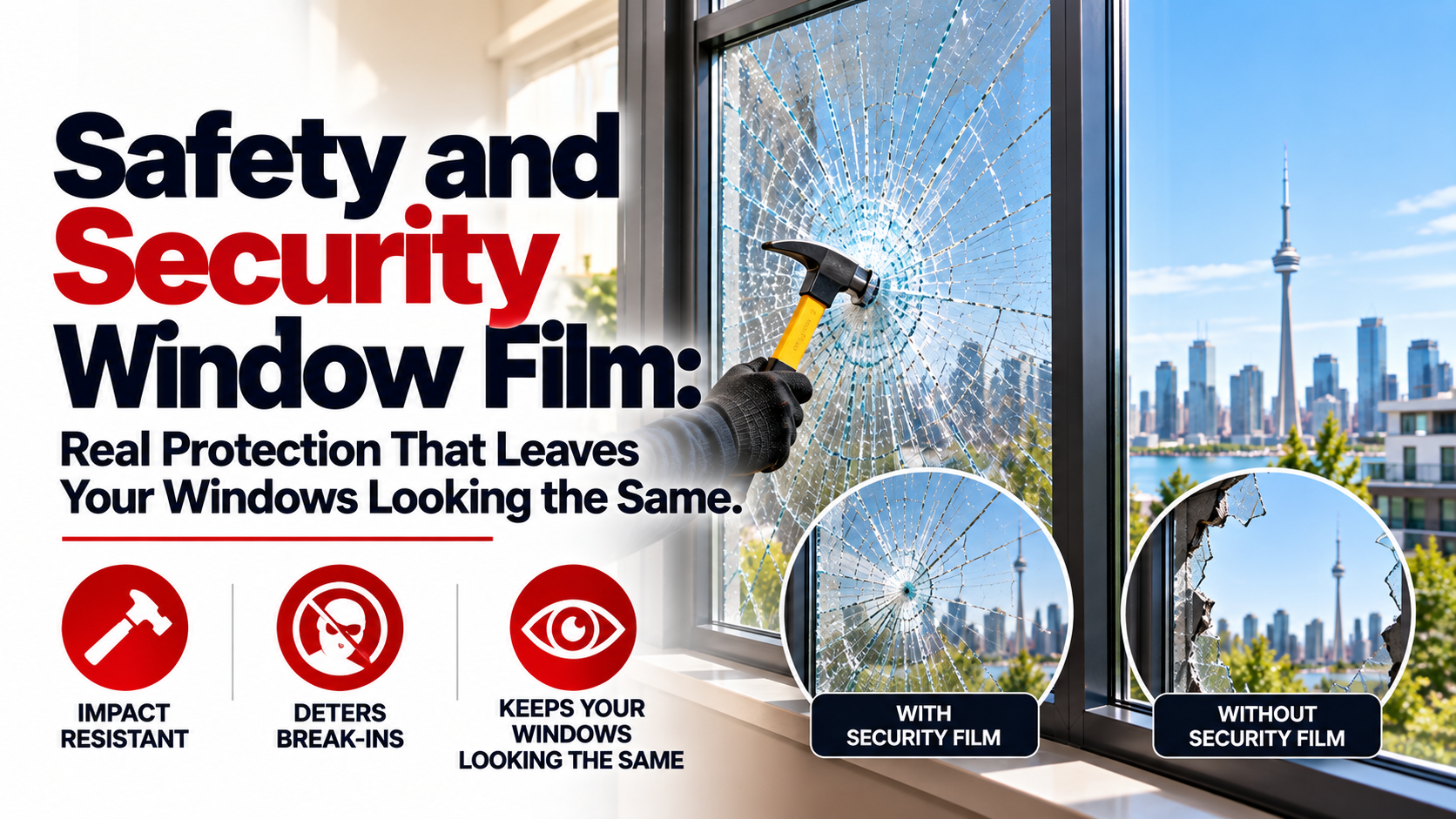
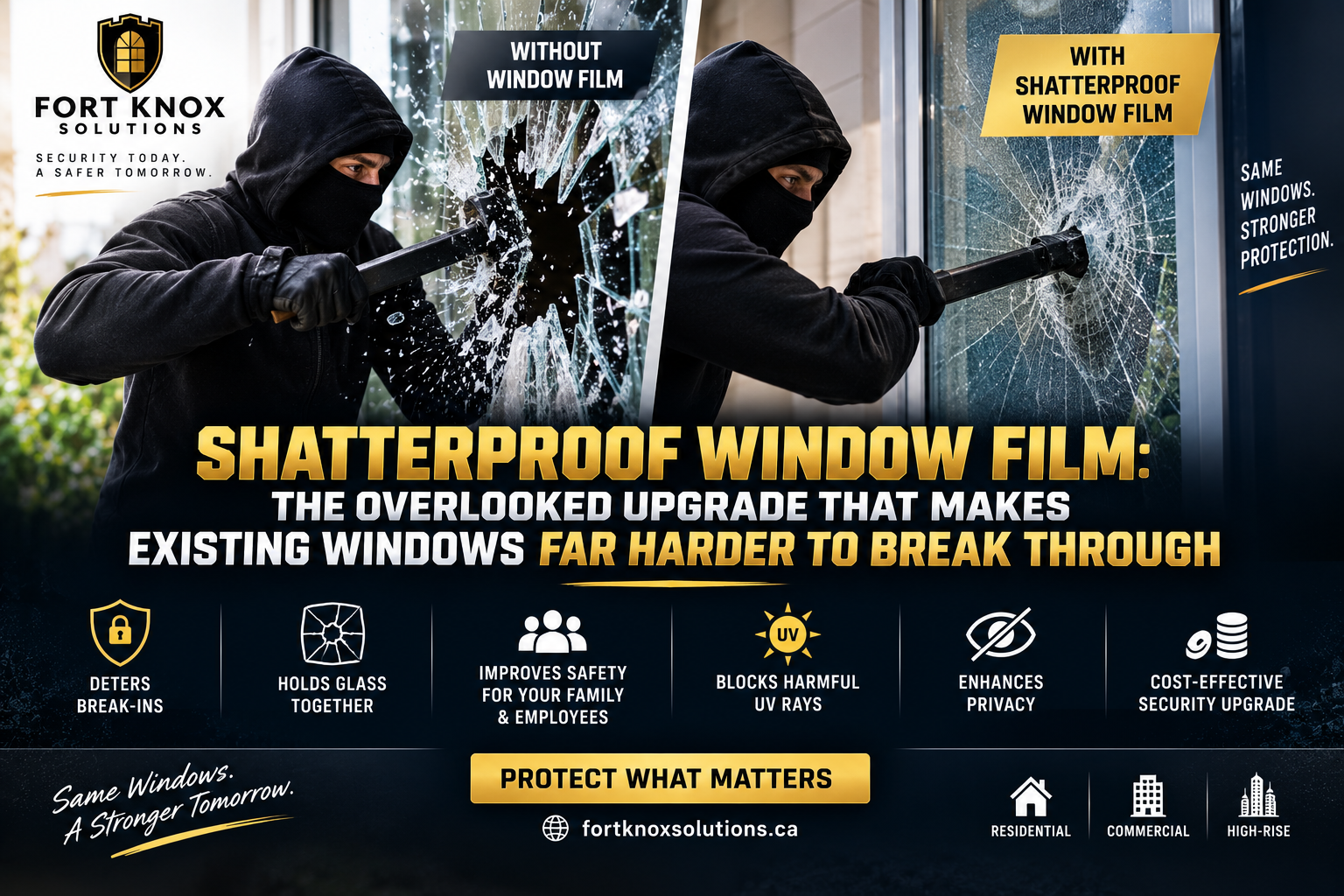
The name is slightly misleading, and it is worth being honest about that up front: the film does not make glass unbreakable. What it changes is how glass behaves when it breaks. Instead of a pane exploding into loose shards and leaving a clean opening, the glass cracks and stays bonded to the film, held in the frame as a single flexible sheet.
That difference sounds small. During a break-in attempt, it is the difference between two seconds and two minutes.
Why Is Glass the Weakest Link in Almost Every Building?
Consider how a house is actually built. The door has a deadbolt, a strike plate, hinges and a frame anchored into the structure. The window has a pane of glass held in place by a bead of sealant.
Everything else on the perimeter is engineered to resist force. The glass is engineered to let in light.
This is why most forced entries are not sophisticated. There is no lock picking and no alarm bypass. There is a rock, a patio chair or a garden tool, one strike, and a hand reaching through to the latch on the inside. The lock was never the target — the glass beside it was.
A ground-floor window or a sliding patio door offers a large, low, quiet and unmonitored target. If that glass is untreated, the rest of the security stack can be bypassed without ever being tested.
How Does Security Film Actually Stop an Opening From Forming?
Three things work at once when film is installed properly.
1. The bonding layer
The adhesive grips every point of the glass surface. When the pane fractures, each fragment is still stuck to the film. The window becomes spiderwebbed but intact, and there is no hole to reach through.
2. Tensile strength
The film itself resists tearing. Someone who has broken the glass now has to cut or punch through a tough polyester membrane rather than simply stepping through an empty frame.
3. Time and noise
Both of the above force repeated, loud, sustained effort in full view of neighbours and cameras. Opportunistic entry depends entirely on speed and quiet. Film removes both.
The result is not an impenetrable barrier. It is a delay, and delay is the most valuable commodity in residential security, because it is what gives an alarm, a camera, a neighbour or the occupant’s own reaction time a chance to matter.
What Film Does and Doesn’t Do
Any installer promising bulletproof glass is selling something else. The accurate version:
- It does hold shattered glass together in the frame after impact.
- It does significantly increase the time and effort needed to create an opening.
- It does reduce flying shards from accidental impacts, storms and debris.
- It does not make glass impossible to break. A sustained, determined attack with the right tool will eventually get through.
- It does not replace an alarm, a camera or a solid door. It supports them by buying them time.
Understood that way, film is one of the highest-value upgrades per dollar on a property, precisely because it protects the surface everything else ignores.
Why Is Film an Unexpected Alternative to Replacing the Windows?
If the windows are already in good condition, replacing them for security reasons alone is an expensive answer to a narrow problem. You would be paying for frames, sashes, seals, installation and disposal in order to upgrade one property of one component: how the glass fails.
Film targets that property directly. The existing windows stay in place. The frames, hardware, sightlines and energy performance stay exactly as they are. The work is done from the inside, usually in a single visit, with no construction, no dust and no exterior change to the building.
For most owners, that is the difference between a project postponed for three years and a project completed this month.
Will It Change How the Windows Look?
This is the objection that stops people from considering glass security at all, and it is the reason film keeps winning the comparison.
Security film is optically clear. Once cured, the glass keeps its natural light, its view and the appearance of ordinary glazing. From the street nothing signals that the window has been treated. There are no bars, no grilles, no visible hardware and nothing that makes a home look fortified or advertises that there is something inside worth protecting.
For heritage properties, condos with facade restrictions, storefronts that depend on display visibility, and anyone who simply does not want a defensive-looking house, that is often the deciding factor.
Which Glass Should Be Protected First?
Filming every window in a building is rarely necessary. Protection should follow exposure. Priority order:
● Sliding and patio doors
The highest-value target on most homes. Enormous glass area, ground level, usually facing a private backyard where someone can work unseen. If only one thing gets filmed, this is it.
● Ground-floor windows out of public view
Side-yard windows, glass behind fences or hedges, and anything facing a laneway. Reachability plus concealment is the combination that matters, not size.
● Basement windows
Low, small, out of sight from inside the house and rarely checked. Their obscurity is exactly what makes them attractive.
● Glass beside and within entry doors
Sidelights and door glass panels are the classic reach-through. Breaking a small pane to turn a thumb-turn deadbolt defeats an expensive lock entirely.
● Large fixed panels and storefront glazing
For commercial properties, film is the primary defence against smash-and-grab, where the whole attack model depends on getting through display glass in seconds.
The same logic scales upward. In towers, where a failed pane means loose fragments over a balcony or sidewalk, the case for treating large panels is even stronger a point covered in more detail in this guide to highrise window safety in Toronto.
What Does an Attempt on Filmed Glass Look Like?
Picture a patio door at the back of a house at 2 a.m. The expectation is one strike, a collapse of glass and a quiet step inside.
Instead the pane cracks and holds. The second strike does the same. The glass is now opaque and spiderwebbed but still sitting in the frame, still blocking the opening, and each attempt is loud. There is no way to reach the interior latch. Every additional second spent is a second of noise, exposure and risk.
In most opportunistic cases that is where the attempt ends — not because the film was invincible, but because the attack was never designed to take that long.
What Else Does Security Film Protect Against?
The security case is the headline, but it is not the whole return.
- Accidental breakage — a ball, a fall, a slammed door. Held glass means far fewer dangerous shards, which matters most in homes with young children or elderly family members.
- Storms and wind-borne debris — the same holding action applies when the impact comes from weather rather than intent. In hurricane-exposed regions this is why film is often paired with hurricane hardware or removable storm panels rather than used on its own.
- UV fade reduction — many quality security films filter a high proportion of ultraviolet light, which helps protect flooring, furniture and artwork from bleaching.
- Clean-up and downtime — a held pane can be replaced on schedule instead of requiring emergency boarding overnight.
Why Does Professional Installation Matter So Much Here?
Film is one of the few security products where the installation determines whether the product works at all.
Performance depends on complete, uniform adhesion across the entire pane and on how the film is handled at the edges. Poor preparation leaves contamination under the film. Poor technique leaves bubbles, creases, silvering or lifted edges. Any of these create failure points, and a film that peels at the edge under impact is not doing the job it was paid for.
Specialist installers also assess before they quote. Fort Knox Solutions, which installs premium safety and security film across Toronto and the GTA, specifies film to the layout and risk profile of the individual property rather than treating every window the same way.
How Does Film Fit With the Rest of a Security Plan?
Good security is layered, and no single layer has to cover the whole property. The sensible approach is to match each measure to the vulnerability it actually solves.
Film handles glass that must stay clear and unobstructed. Where a visible physical barrier is the better answer, security roller shutters cover exposed windows and patio doors outright, and accordion shutters suit openings that need to be secured and then opened again daily. Door reinforcement addresses frames and strike points, which is where the other half of forced entries happen.
How to Decide What a Property Needs
Walk the perimeter once, from the outside, and answer these:
- Which windows could someone reach without a ladder?
- Which glass cannot be seen from the street or a neighbour’s window?
- Could someone break a small pane and reach an interior lock?
- How much glass is in the patio or sliding door, and what is behind it?
- If that glass shattered with people in the room, what would happen?
The windows that give you pause are the priority list. Pricing depends on the number of windows, the glass size and the film specification, so a real quote starts with a look at the actual openings — which is why most specialists, including Fort Knox Solutions, run a free security audit before proposing anything.
Frequently Asked Questions
1. Does shatterproof window film make glass unbreakable?
No. It is designed to hold broken glass together and make forced entry slower and harder, not to prevent breakage entirely. Any film advertised as unbreakable should be treated with caution.
2. Can security film be applied to existing windows?
In most cases, yes. If the glass is sound and clean, film is applied to the interior surface of the existing pane — no replacement, no frame work and no exterior change.
3. Will it make rooms darker?
Clear security film is optically transparent and is intended to preserve natural light and the view. Tinted or solar options exist if glare or heat reduction is also wanted.
4. Does it work on sliding and patio doors?
Yes, and these are usually the highest priority. Large ground-level glass panels are the most common target and benefit most from the added resistance.
5. How long does security film last?
Professionally installed film on interior glass is a long-term treatment, typically measured in many years. Lifespan depends on the film grade, sun exposure and installation quality.
6. Can it be installed as a DIY job?
DIY film is available, but performance depends almost entirely on adhesion and edge treatment. Bubbles, contamination and lifted edges create failure points exactly where the film is supposed to hold, which is why security-grade film is normally installed professionally.
7. Can film be combined with shutters or bars?
Yes. Film reinforces the glass itself while shutters, gates or bars add a separate physical barrier. Many properties use film on most glass and a physical barrier on a few high-exposure openings.
The Takeaway
Locks, doors and cameras do their job. The glass beside them is the part still waiting for an upgrade, and it is the part that fails first.
Shatterproof window film is not a magic barrier, and nobody should buy it as one. It is a cheap, invisible way to turn the weakest surface on a building into one that takes real time and real noise to defeat. For homeowners and business owners weighing where to spend a limited security budget, that is usually the best-value place to start. More practical property protection guides are collected in the home service section.