





Most Toronto homeowners only think about their windows when something goes wrong. The armchair by the patio door has faded two shades. The home office is unusable after 4 p.m. because of glare. A neighbour mentions, a little awkwardly, that they can see straight into your kitchen at night.
Each of those is a glass problem, and installing window film in Toronto can solve all of them without replacing a single pane. The catch is that “window film” covers very different products. A clear UV film, a frosted privacy film and a thick security laminate look alike on the roll, yet they do completely different jobs. Choosing well means matching each window to the job it actually needs to do.
Read the Spec Sheet Before You Compare Samples
A sample shows you how a film looks. The manufacturer’s spec sheet shows you how it performs. Ask for it before you hold anything up to the glass, because three numbers predict how the room will feel.
Visible light transmission (VLT)
VLT is the share of daylight that passes through the filmed glass. A high VLT leaves the room looking almost unchanged, while a low VLT gives a darker, shaded look. That trade-off matters here more than in sunnier cities. In a north-facing room or a narrow semi with few windows, a low-VLT film can make the space feel gloomy by mid-afternoon in November. If you read, work or cook near the window, protect the daylight first and deal with glare second.
UV rejection
Ultraviolet light is a leading cause of faded hardwood, rugs, artwork and upholstery near sunny glass. However, you do not need a dark tint to stop it. Many quality films, clear ones included, are rated to block 99% or more of UV. In addition, the Skin Cancer Foundation awards its Seal of Recommendation to architectural window films, which gives you a quick way to shortlist products. Even so, confirm the figure for the exact film, not just the product line.
Total solar energy rejected (TSER) and glare reduction
TSER tells you how much of the sun’s heat the film keeps outside. The glare reduction figure tells you how much harsh brightness it removes. Clear films usually score modestly on both. A west-facing condo that bakes every July evening needs a film built for heat rejection, and that normally means accepting a lower VLT. Where possible, look for films that carry a National Fenestration Rating Council (NFRC) performance label, because labelled products give you numbers you can compare side by side.
Privacy: Choose the Finish That Matches the Time of Day
Clear film leaves the view unchanged in both directions. To gain privacy, you need a finish that diffuses or reflects light, and each one comes with a condition.
- Frosted film blurs the view at every hour. The cost is that you lose your own view out as well.
- Mirrored film works only while it is brighter outside than inside. After dark, with the lights on, the effect reverses, so you still need blinds at night.
- Tinted film dims what passers-by see without hiding it. Treat it as a glare product first and a privacy product second.
Partial coverage often beats full coverage. A frosted band across the lower half of a street-facing window blocks eye-level sightlines from the sidewalk, while the clear upper section keeps pulling in daylight. For ground-floor glass, some manufacturers make frosted or tinted versions of impact-resistant film, so a single installation can handle privacy and protection together.
Privacy and Security Are Two Different Problems
Your glass exposes your home in two ways. It shows people what is inside, and it gives anyone with bad intentions a quick way in.
Try a simple test. One evening, turn on your lights, walk out to the sidewalk and note what you can make out: a laptop on the island, a bag by the side door, a bike behind the patio slider. That list tells you which rooms need less visibility.
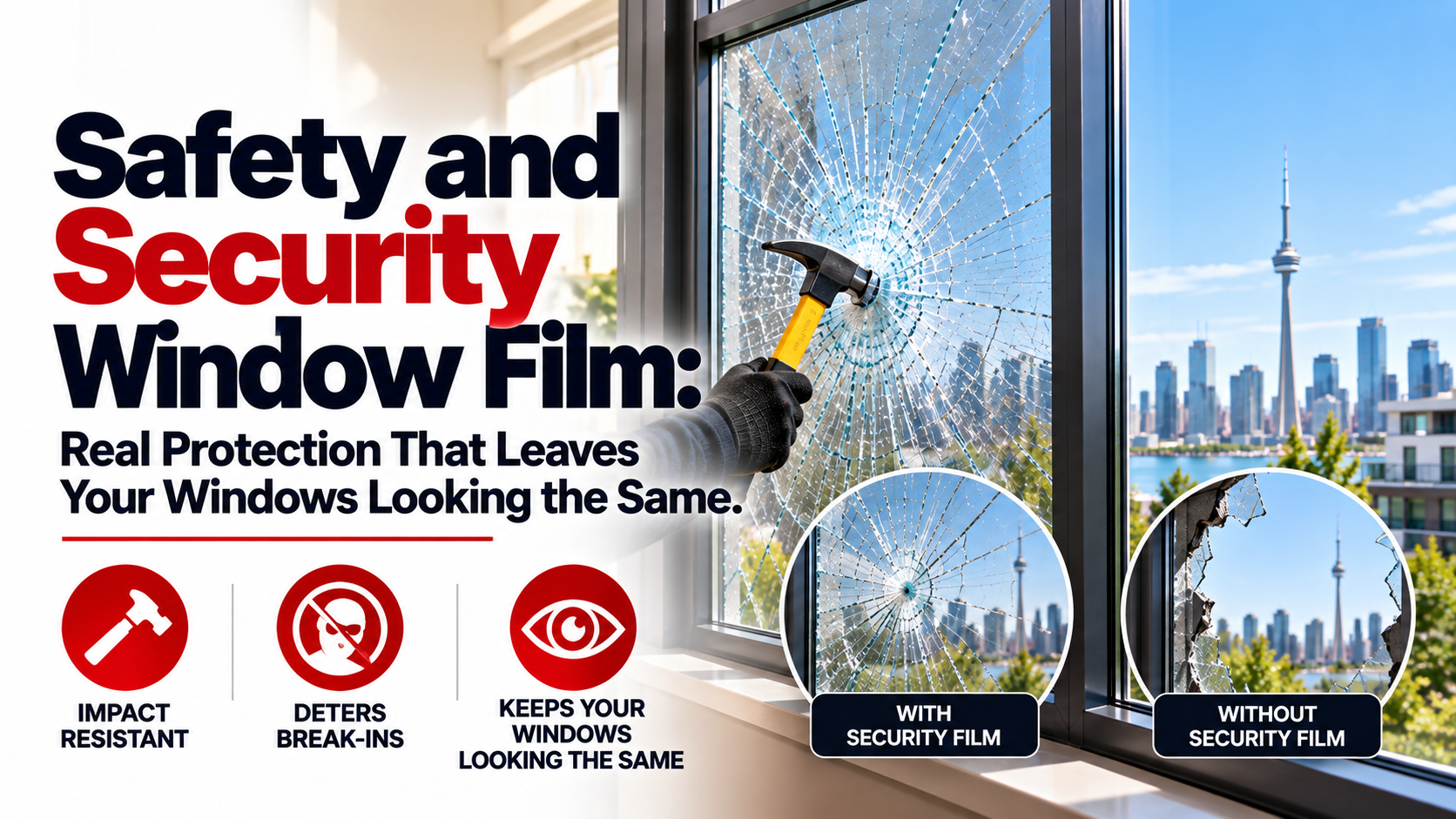
Access is a separate question. Toronto Police describe most residential break-ins as crimes of opportunity, and they single out sliding glass doors as a common target because they open easily. Clear security film answers that risk. It is far thicker than solar film and is designed to keep shattered glass bonded together, so getting through takes repeated, noisy blows instead of one quick strike.
A rear slider that neighbours cannot see and that is easy to reach from the yard often needs both a privacy finish and a security laminate. One honest caveat: film delays entry; it does not make glass unbreakable. For that reason, pair it with door reinforcement on your most likely entry points so the delay actually counts.
Window Film Toronto Checklist: Which Panes to Treat First
Few homes need every window filmed. Start with these three groups:
- Reachable glass. Patio doors, side-door sidelights and basement windows that someone can get to from the ground.
- Sun-damaged rooms. Spaces where the sun fades floors and furniture or overheats the room in summer.
- Street-facing rooms. Living rooms, kitchens and bedrooms where you want daytime privacy.
Upper-floor windows facing the backyard can usually wait. If you live in a condo, check before you book an installer. Most Ontario condo declarations require written board approval before owners alter common elements, and depending on your declaration, windows and their exterior appearance can fall into that category. Clear film is hard to spot from outside, so it tends to raise fewer questions than tinted or mirrored finishes.
Caring for Film After Installation
Small water pockets or a light haze in the first few weeks are normal while the adhesive cures, and they usually clear without help. Do not press on them, and wait for your installer’s go-ahead before cleaning the filmed side. After that, a soft cloth and a mild, non-abrasive cleaner are all you need. Never use blades, scrapers or scouring pads.
Over time, sun exposure is what wears out low-grade film. With Fort Knox Solutions, that risk sits with the installer rather than the homeowner. Every installation includes free film replacement for life against yellowing, bubbling or cracking, along with a free yearly checkup.
For readers who want more than scores, The Sports America brings together sports news, athlete profiles, emerging trends and lifestyle coverage in one place. From breaking stories to the habits and gear shaping how fans live and play, it is a go-to source for staying informed on and off the field.
Frequently Asked Questions
1. Will window film make my home darker?
Only if you choose a low-VLT product. Clear film is barely noticeable, while dark tints and mirrored finishes remove visible light, most noticeably on grey days.
2. Does clear window film still block UV?
Yes. Many clear films are rated to block 99% or more of UV, so you can protect floors and furniture without changing how the room looks.
3. Can window film reduce winter heat loss?
Standard clear safety film is not designed for that. Low-e films are a different product, and the US Department of Energy notes that films with low-e coatings can reduce winter heat loss and improve comfort near the glass. Confirm which type you are buying if winter comfort is your goal.
4. Will people notice the film from the street?
Clear film is hard to spot from outside. Tinted and mirrored finishes are obvious, which is worth knowing if your condo board limits visible changes to windows.
5. Can I install window film myself?
Thin decorative film is a manageable DIY job. Impact-resistant film is thicker, harder to lay flat and only performs with clean, precise edges, so professional installation is the safer choice.