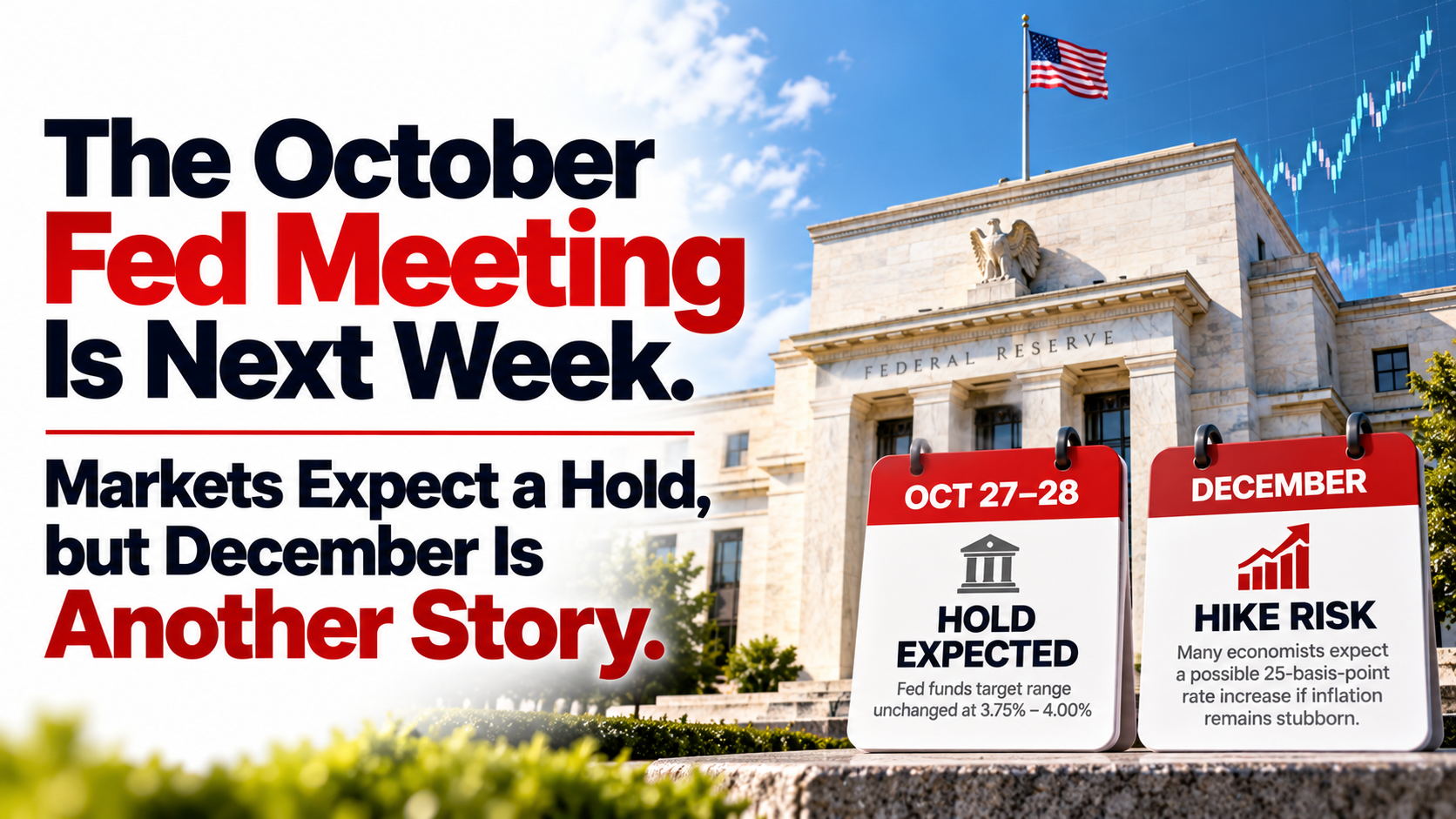









Three weeks ago, Wall Street had nearly written off a hike at the October Fed meeting. Then September’s inflation report came in hot, and the odds doubled overnight. Now they have fallen again. With policymakers gathering on October 27 and 28, markets see a hold as the likely outcome, but they expect a hike in December.
That whipsaw says a lot about where the Federal Reserve stands. Inflation is running well above target, the job market is cooling and long-term borrowing costs remain near their highest levels in two decades. Here is what changed, what to expect on October 28 and what it means for your money.
What the September CPI report changed
Consumer prices rose 0.6% in September and 3.7% from a year earlier, up from 3.4% in August and the highest annual rate since May. Gasoline prices jumped 9.1% in a single month and accounted for more than half of the increase. Fuel oil, which many households use for heat, climbed even faster.
Economists had expected a 0.5% monthly rise, so the headline number was a clear miss. Core inflation, which strips out food and energy, also beat forecasts. It rose 0.3% for the month and 2.6% over the year, up from 2.4% in August. As a result, odds of an October hike roughly doubled on the day of the report, from about 22% to the mid-40s on CME FedWatch.
The reaction was immediate. Robin Brooks of the Brookings Institution said the report put an October hike back on the table, and Navy Federal Credit Union economist Heather Long called the decision a coin flip at the time.
The jump did not last. Within a week, the odds slid back to roughly 15%. Soft housing data, calmer comments from Fed officials and a pullback in long-term yields all played a part.
Why markets now expect a hold at the October Fed meeting
Several officials have pushed back on moving again so soon. Governor Christopher Waller said higher Treasury yields are already restraining the economy, which reduces the urgency of another hike. Chair Kevin Warsh, speaking at an international gathering, described inflation as a challenge shared by economies around the world.
The labor market also argues for patience. Employers added just 29,000 jobs in September, and the unemployment rate ticked up to 4.2%. Average hourly earnings grew 3.0% over the year, the slowest pace since 2021.
Timing matters, too. The decision lands on October 28, six days before the November 3 midterm elections. A UBS analyst called an election-eve hike politically untenable, although Fed officials have long said politics plays no role in their decisions.
The jobs report in detail
The September payroll number was weak almost everywhere. Private employers added 46,000 jobs, while government payrolls fell by 17,000. Over the past year, payroll growth has averaged only about 45,000 a month.
Unemployment tells a calmer story. The rate has stayed in a narrow 4.1% to 4.3% range since March. That combination, slow hiring without a spike in layoffs, is one reason officials feel they can wait.
How the Fed got here
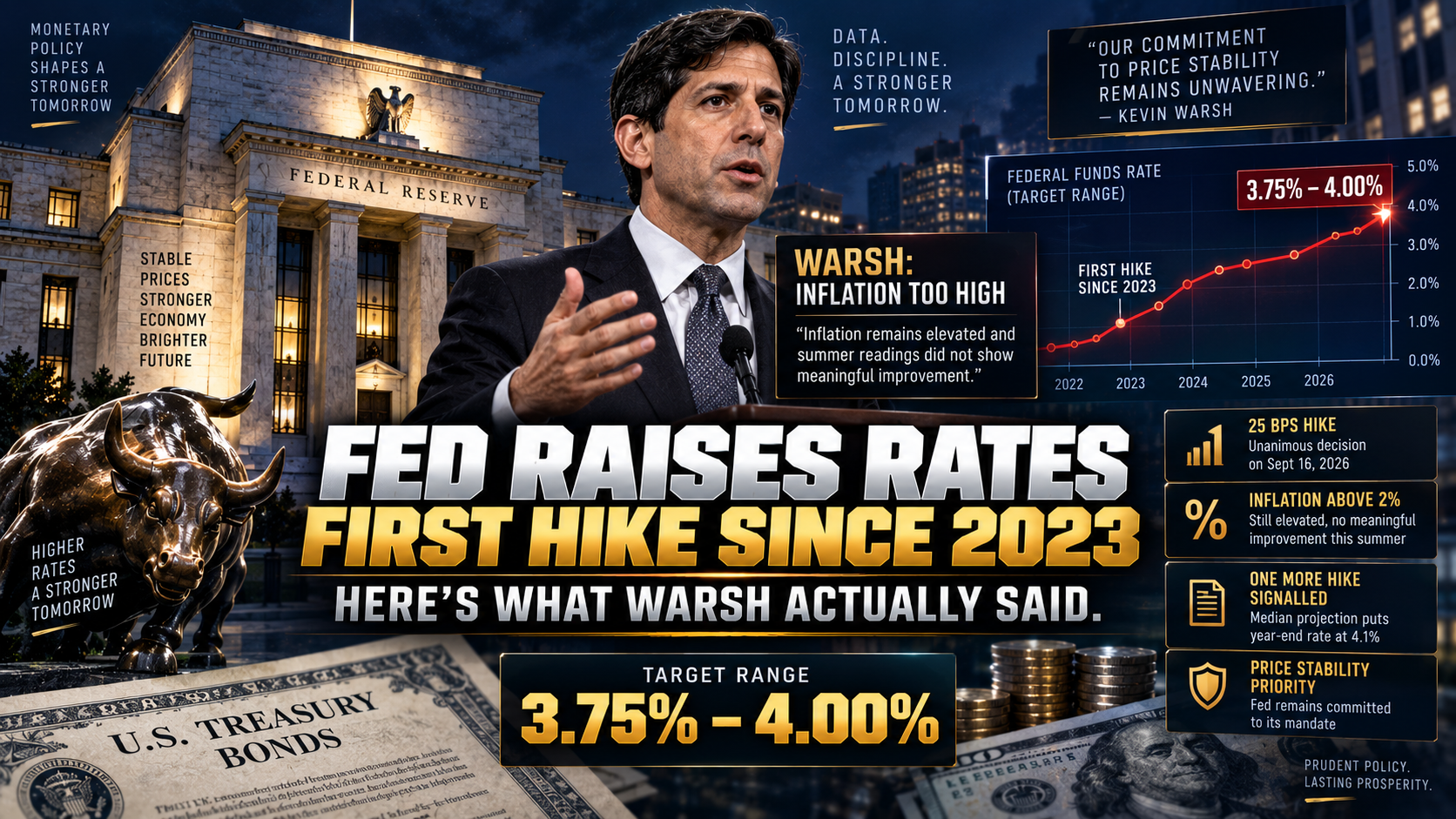
September’s increase ended a long pause. The Fed had cut rates in December 2025 and then held its benchmark at 3.5% to 3.75% for most of this year. Rising energy costs and sticky inflation changed the math. The September 16 move lifted the range to 3.75% to 4%, the first increase since 2023.
Warsh described that hike as removing a dose of accommodation. He also tied part of the rise in Treasury yields to strong growth and heavy borrowing for the AI build-out, which helps explain why long-term rates have stayed high.
Why December is still in play
None of this means the Fed is done. Markets firmly expect a hike at the December 9 meeting, even with about an 80% chance of a hold this month. By some readings, CME FedWatch now prices roughly a 90% chance of an increase by December.
The September hike set the tone. That vote was unanimous at 12-0, and 16 of 19 officials projected at least one more increase this year. The federal funds rate now sits at 3.75% to 4%, so the debate is about timing rather than direction.
A December hike would lift the range to 4% to 4.25%. That would match the median projection officials published in September, which put the federal funds rate at about 4.1% by the end of 2026.
Cleveland Fed President Beth Hammack has also warned that inflation pressures go well beyond energy. She pointed to tariffs, AI investment and rising services prices. With oil still volatile, that argument has not gone away.
The bond market has eased, for now
Long-term yields have come off their peaks. The 2-year yield, which tracks expectations for Fed policy more closely, stood at 4.79% on October 20. The 10-year Treasury yield closed at 5.12% on October 20, down from about 5.31% on October 5, according to Treasury data. Even so, it remains close to its highest level since 2002. Mortgage rates have followed, with the Mortgage Bankers Association’s 30-year fixed rate reaching 7.3% at the end of September, its highest since November 2023.
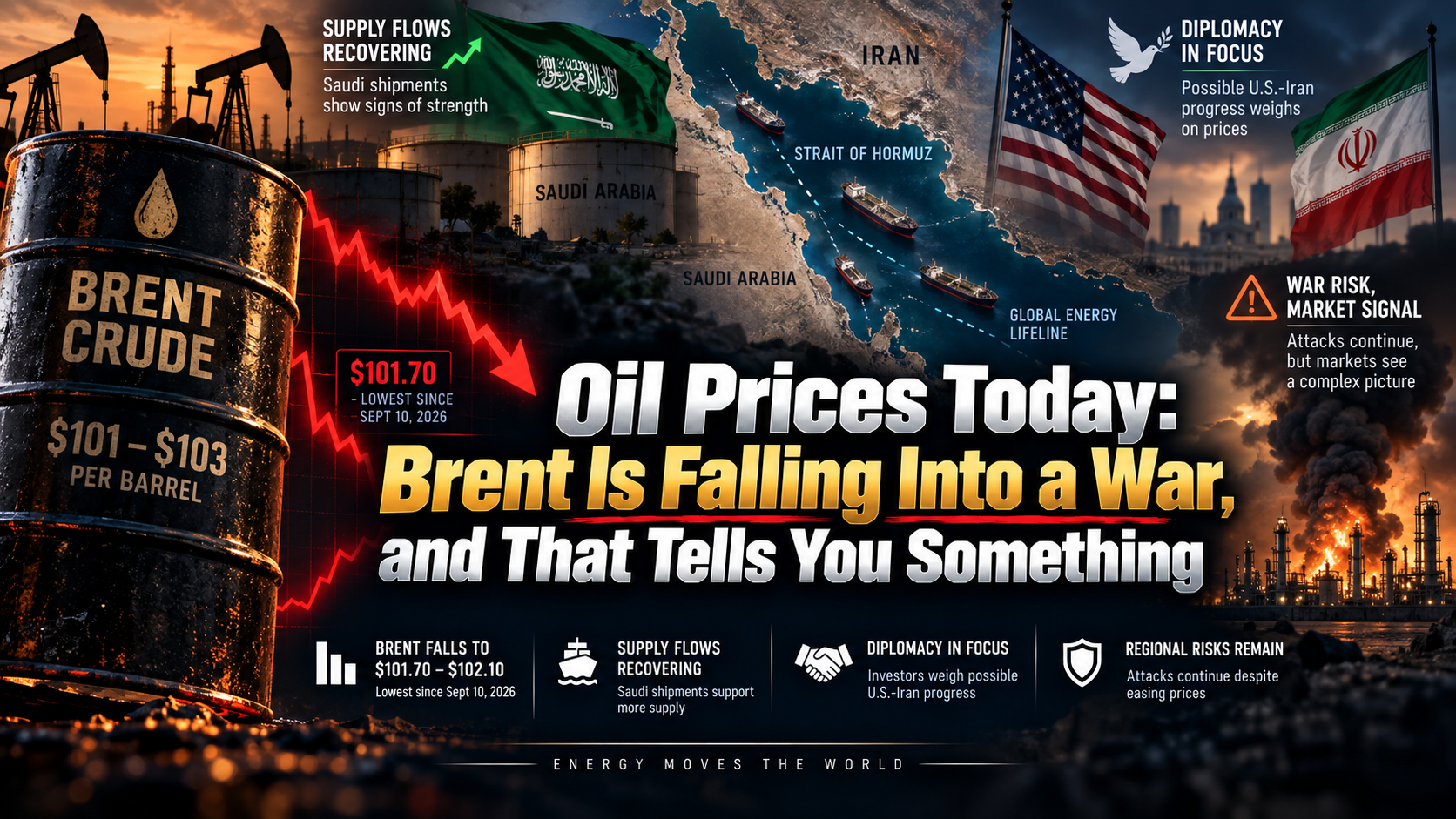
Oil is the wild card. Energy drove most of September’s inflation spike, and another jump in crude would feed straight into gasoline prices. That could revive talk of a faster pace of hikes, even after a hold this month.
What to watch before October 28
- The quiet period: Fed officials entered their pre-meeting blackout on October 17, so there will be no more policy speeches before the decision.
- Oil and gasoline: Another jump in crude would revive inflation worries quickly.
- Treasury auctions: Weak demand for government debt could push long-term yields back up, even without a Fed move.
- Corporate earnings: Third-quarter results from big banks and tech companies will shape how investors read the economy into the decision.
- Prediction markets: On October 21, fed funds futures, Kalshi and Polymarket all put a hike next week at roughly one in eight.
What to expect on October 28
Hold with a hawkish tone (most likely). The Fed keeps rates at 3.75% to 4% and signals that December remains live. Markets would read this as a delay rather than a change of course.
Hold with dissent. One or more officials could vote for an immediate hike. Dissents are worth watching, because they would show how divided the committee has become.
Surprise hike. A quarter-point increase is possible but unlikely. Because few traders expect it, stocks and bonds would probably both take a hit.
There will be no fresh rate projections this time. The Fed updates its forecasts four times a year, and the next set arrives with the December decision. Warsh has also moved away from detailed forward guidance, so markets have less visibility than usual.
What it means for your money
- Borrowers: Mortgage and car-loan rates follow the 10-year yield, which remains above 5%. Do not count on the Fed for quick relief.
- Savers: High-yield savings, money market funds and Treasury bills still pay some of the best rates in nearly 20 years. A certificate of deposit can lock in current yields if you want certainty.
- Credit card holders: Card rates move with the Fed’s benchmark. A December hike would push them higher, so paying down variable-rate balances now is the safest move.
- Homebuyers: Mortgage rates crossed 7% in September. If you are close to buying, a rate lock protects you if yields jump again.
- Homeowners with a HELOC: Home equity lines are usually tied to the prime rate, which moves with the Fed.
- Investors: Expect volatility around the 2 p.m. Eastern decision on October 28 and the press conference that follows.
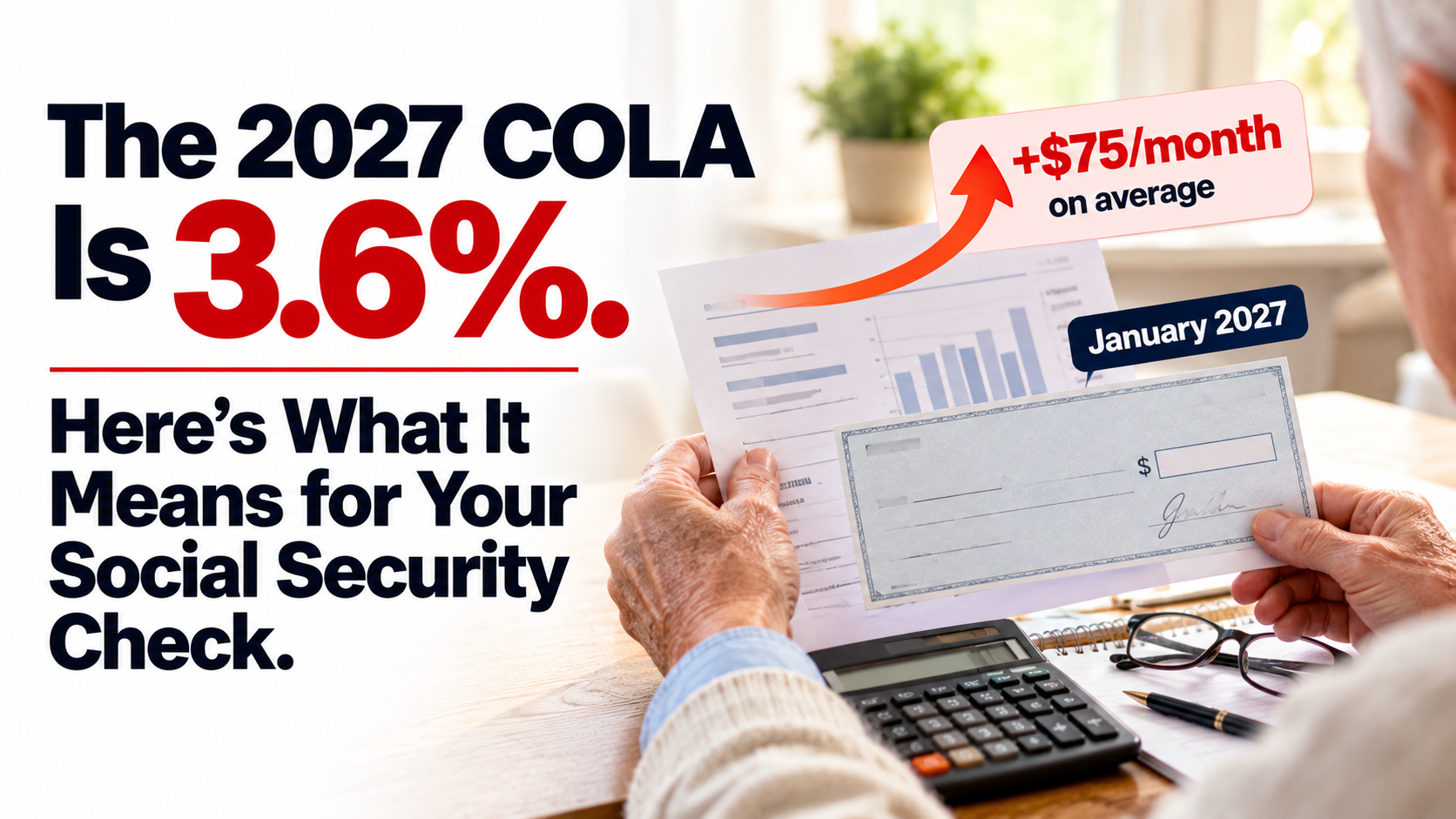
- Retirees: The same hot September report produced next year’s 3.6% Social Security cost-of-living adjustment.
The bottom line on the October Fed meeting
The October Fed meeting now looks likely to end in a hold, after a hot September CPI report briefly put a hike back on the table. Still, a hold is not relief. Inflation is running at 3.7%, oil remains a threat and markets see a December hike as close to certain.
Watch the statement at 2 p.m. Eastern on October 28 and Warsh’s press conference afterward. Any dissent, or any hint that December is less certain, will move markets. If you have a mortgage, a car loan or cash in the bank, the long end of the yield curve still matters more than the headline decision.
This article is for general information only and does not constitute financial advice.