







The Sports America | Sports in the United States

Sunday, October 18, 2026
cost of attending an NFL game

The Cost of Attending an NFL Game Is Up 72% in a Decade. Here’s How to Pay Less.

In 2015, a beer at MetLife Stadium cost about $5. Today it costs around $12, an increase of 140% in a decade, and it is only one line in the rising cost of attending an NFL game. That single number captures a trend that fans across the country have felt in their wallets. Game-day costs have risen far faster than general inflation, and the 2026 season has pushed them higher still. Tickets, concessions and parking have all climbed, with some markets seeing increases that would be remarkable in any consumer category. Here is what the data says about what fans actually pay, where it hurts most, where it is still relatively affordable, and how to enjoy a game without wrecking the monthly budget. The cost of attending an NFL game has jumped 72% in a decade The clearest long-term picture comes from FinanceBuzz, which tracked game-day costs over the past ten years. Its analysis found that the average cost of going to an NFL game rose by $82, or 72%, between 2015 and 2025. That is nearly double the national rate of inflation over the same period, which was 36.5%. The measure is simple and realistic: one ticket, one beer, one hot dog and a share of parking. By that standard, the average per-person cost across the league last season was $196. The acceleration is recent. In 2024, the league average stood at $158. One season later it had jumped by nearly $40 per fan. Rather than creeping up gradually, costs have surged over the past two years. Most of that increase comes down to a single line item: the ticket itself. The league-average ticket rose from $86 in 2015 to $155 in 2025, an 81% jump. Beer and hot dogs have climbed as well, but a fan can skip the beer. Nobody gets in without a seat. The most expensive fan bases Some teams have seen increases that dwarf the league average. Detroit Lions. The cost of attending a Lions game rose from $98 in 2015 to $429 last season, a staggering 336% increase and the largest in the league. A decade ago, Detroit was one of the cheapest tickets in football. Years of on-field success have transformed demand. Las Vegas Raiders. Costs rose 238%, driven largely by the move to Allegiant Stadium and the premium pricing that came with it. Buffalo Bills. Per-person costs climbed from $91 to $294, a 223% increase. The Bills have also just opened a new $2.2 billion stadium with 60,108 seats, which is already pushing prices even higher. According to Bookies.com’s family cost rankings, the Bills now have the league’s highest average single ticket at $397.02, with a block of four seats averaging $1,588.08. Buffalo unseated the Chicago Bears, who had topped that list every year since 2023. The most affordable teams At the other end of the scale, a handful of fan bases have actually seen costs fall. New Orleans Saints. The per-person cost of attending a Saints game dropped from $117 in 2015 to $110 in 2025, a 6% decrease. Indianapolis Colts. Costs fell from $110 to $104, down 5%. Measured against a decade of inflation, both of those represent a genuine discount. Cleveland Browns. Browns fans enjoy the cheapest overall experience in 2026, with a family-of-four game-day cost of $251.09, according to Bookies.com. Concessions: where the small costs add up Ticket prices get the headlines, but concessions are where many families feel the sting on the day itself. Action Network priced a simple order of two beers, two soft drinks and four hot dogs at every NFL stadium for 2026. The results reveal a wide spread: Beer prices, in particular, have outpaced inflation dramatically. Research highlighted by The Food Institute found that beer costs at six NFL stadiums have doubled or more since 2015, rising at roughly four times the rate of inflation. The true cost of a season of fandom For die-hard supporters, a single game is only the start. RotoWire’s 2026 fan cost study calculated the full price of following a team properly: attending every home game, streaming every road game and making one away trip to the team’s farthest road fixture. The spread between teams was enormous. The most expensive fan base in football belongs to the Buffalo Bills, where a committed season runs about $4,229. Cleveland Browns fans get the best deal in the league at roughly $1,131. That gap of $3,098 means a Bills supporter pays nearly four times what a Browns fan does for the same level of devotion. Streaming is a growing part of that equation. With games spread across broadcast networks, cable and multiple streaming services, fans who want to watch every snap now need several subscriptions at once. Why prices keep rising Several forces are pushing costs upward at the same time. Demand is at record levels. The NFL remains the most-watched sport in the United States, and winning teams in particular have seen ticket demand surge. New stadiums bring premium pricing. Buffalo, Las Vegas and Los Angeles all illustrate how new venues reset the price floor, with seat licences, premium clubs and dynamic pricing. Dynamic pricing is standard. Teams and resale platforms now adjust prices in real time based on opponent, weather, team form and day of the week. Wider inflation. Food, labour and energy costs have risen across the economy. Diesel has hit record highs above $6.50 a gallon this month, which feeds into the cost of everything from food deliveries to stadium operations. Seven ways to cut the cost of a game day Rising prices do not have to mean staying home. A little planning goes a long way. 1. Pick the right opponent. Games against less glamorous opponents, or late-season games involving teams out of contention, typically sell for far less on the resale market. 2. Watch prices closer to kickoff. For low-demand games, resale prices often fall in the final days as sellers try to offload tickets. For marquee games, the opposite is true, so…

Read More
NFL Week

NFL Week 3 2026 Odds: The Full Board After a Week 2 That Broke Everything

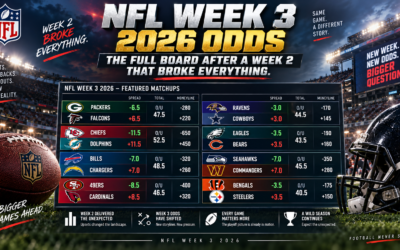
Week 2 of the 2026 NFL Week did what September is supposed to do. It broke things. Cleveland walked into Tampa as an eight-point underdog and walked out with a 23-19 win. Carolina put 34 unanswered-looking points on Atlanta. Minnesota beat Chicago 9-3 in a game that produced three total touchdowns between two teams and cost the Bears their quarterback. Green Bay needed overtime to avoid an 0-2 start. And the two most alarming injuries of the weekend both happened to quarterbacks who were, at the time, playing extremely well. The NFL Week 3 2026 odds are already posted, and they read like a market that is not quite sure what it watched. Here is the board, and here is what actually happened to produce it. The full NFL Week 3 2026 odds board Thursday opens with Atlanta travelling to Green Bay, where the Packers are laying seven points with a total of 44.5. That is a steep number for a team that just needed extra time to beat the Jets, and a soft one for a Falcons side that was dismantled by Carolina. The Sunday early window carries most of the volume. Cincinnati is a 3.5-point favourite at Pittsburgh with a total of 43.5. Detroit lays 6.5 against the Jets on a 48 total. Carolina is a three-point road favourite at Cleveland, which is the market’s way of saying it believes the Panthers more than the Browns despite Cleveland’s upset. New England is a 2.5-point underdog at Jacksonville. Tennessee travels to the Giants as a six-point dog. Two lines are worth flagging. Buffalo is a seven-point favourite over the Chargers with a total of 50, the highest number on the board. And Seattle is a six-point favourite in Washington on a 41 total, which was priced before the Commanders lost Jayden Daniels to a dislocated elbow. Expect that spread to move. What Week 2 actually told us Cleveland’s upset was the survivor-pool killer The Browns beating Tampa Bay outright at plus-eight is the result that shaped this week’s board. It was also the strangest game of the weekend. Lightning suspended play for more than two hours with the Buccaneers mounting a late comeback, and when the game finally resumed, Cleveland’s defense closed it out. Deshaun Watson had led two second-half touchdown drives to get them there. Tampa Bay is now 0-2, having lost both games by six points or fewer. That is a specific kind of frustrating start, and it is also why the market has not abandoned them. Cleveland moves to 1-1 and, judging by the Week 3 line against Carolina, is still not believed. For anyone running a survivor pool, that single result did enormous damage. Tampa Bay was one of the most popular picks on the board. The Vikings are winning ugly, and the Bears are in trouble Minnesota’s 9-3 win over Chicago was the second consecutive game in which the Vikings defense decided the outcome. That is a real identity, and the schedule has not been kind so far. Chicago’s problem is larger. Caleb Williams left with a hamstring injury, and the Bears offense scored three points. Two poor performances can be noise. Two poor performances plus a quarterback injury in a division containing Detroit and Green Bay is the start of a lost September. Dallas made a statement, and Washington paid for it Dak Prescott completed 26 of 31 passes for 279 yards and four touchdowns in the 37-20 win over the Commanders, finishing with a 143.8 passer rating. His fourth touchdown, a 24-yard throw to CeeDee Lamb, was the 249th of his career and moved him past Tony Romo for the most in Cowboys history. Lamb finished with 153 receiving yards and two scores. Dallas needed that after losing to the Giants in Week 1. They got it, and they got it comprehensively. Kansas City and Denver both found something The Chiefs edged Indianapolis 33-30 to move to 2-0 while the Colts fell to 0-2. Denver came from behind to beat Jacksonville, with Bo Nix completing five of six passes outside the tackle box for 110 yards, a touchdown and a perfect passer rating, and rookie running back Jonah Coleman scoring the go-ahead touchdown from three yards out. Elsewhere, New England handled Pittsburgh in a game where Aaron Rodgers threw for 187 yards with no touchdowns and an interception, and the Steelers managed three points. Philadelphia got past Tennessee on the final possession again. New Orleans beat Baltimore 24-17. Cincinnati beat Houston 20-6. Seattle rolled Arizona behind three touchdowns from Jaxon Smith-Njigba. How to read the NFL Week 3 2026 odds without overreacting Two weeks of data is not enough to know anything, but it is enough to mislead you. Three filters help. Separate usage from output. A running back who plays 65% of snaps in a loss matters more than one who scores twice on twelve touches. Snap share is sticky across a season. Touchdowns are not. The same logic applies to how you read team results: a defense forcing pressure at a high rate is a repeatable signal, while a 9-3 scoreline is mostly circumstance. Watch the line move, not the opening number. Openers reflect the model. Where the number settles by Sunday reflects the money. Seattle at Washington is the clearest example this week, because the Daniels news landed after the line was posted. Discount close games against bad teams more than you discount losses to good ones. Tampa Bay losing two one-score games is a different problem from Chicago scoring three points. The first is variance. The second is structural. The injury report is the real Week 3 storyline Three starting quarterbacks left Sunday’s games or are now in doubt, and that is doing more to move these numbers than anything tactical. Jayden Daniels dislocated his left elbow on the final play of the first half in Dallas and was carted off with his arm in an air cast. Washington’s coach Dan Quinn confirmed the dislocation after the…

Read More
Jayden Daniels

Jayden Daniels Dislocated the Same Elbow Again. Washington’s Season Just Changed Shape.

Three seconds remained in the first half at AT&T Stadium. Washington had the ball on the Dallas one-yard line, trailing 17-10, and Dan Quinn waved off the field goal unit. It was an aggressive call from a coach whose team had just clawed back from 17-3 down. It was also, in hindsight, the play that may have decided the Commanders’ season.Jayden Daniels took the snap from under center. Left guard Chris Paul stepped on his back foot as he dropped. Daniels stumbled, threw out his left arm to break the fall, and the elbow gave way beneath him. He got rid of the ball, incomplete, and then stayed down. The Jayden Daniels injury update that followed was short and grim. Washington’s quarterback was carted off with his arm in an air cast and a towel over his head. After the game, Quinn confirmed a dislocated left elbow and said X-rays showed no fracture, with Daniels flying home to undergo further testing on Monday. Dallas won 37-20. Nobody in the visiting locker room was talking about the scoreline. Why this Jayden Daniels injury update is worse than “no fracture” sounds A clean X-ray reads like good news. In this case it mostly tells you what did not happen. The problem is the word “again.” Daniels dislocated the same left elbow in Week 9 of last season, against Seattle, in a 38-14 defeat. He missed four games. He then reaggravated it in his first game back while trying to make a tackle after an interception, and did not play again that year. All told, he appeared in seven games in his second NFL season after a rookie campaign that won him Offensive Rookie of the Year and took Washington to the NFC Championship Game. Repeat dislocations behave differently from first-time ones. The original injury stretches or tears the ligaments that hold the joint together, and those structures heal looser than they started. A joint that has come out once comes out more easily the second time, usually with less force. That is why the mechanism here looked so innocuous: a lineman’s foot, a stumble, an arm put down to break a fall. Nothing about that sequence should dislocate a healthy elbow. So the encouraging reading of this Jayden Daniels injury update — no break, joint reduced, tests to follow — needs a caveat. The relevant question is not whether the bone is intact. It is whether the ligaments have anything left to hold, and whether Washington is now looking at a surgical repair rather than another four-week absence. He was playing the best half of his season The cruelty is in the timing. Daniels had been excellent. Before the injury he was 11-of-17 for 96 yards and a touchdown, with seven carries for 69 rushing yards and no interceptions. More importantly, he was playing the way the coaching staff has spent two years asking him to play. He was sliding when plays broke down. Daniel was taking what the defense gave him rather than hunting the explosive throw. He was not absorbing unnecessary contact. Washington had been down 10-0 and then 17-3. Daniels brought them back almost single-handedly, capping the drive that mattered with a four-yard touchdown pass to Stefon Diggs after rookie kicker Drew Stevens had converted from 27 yards. On the Fox broadcast, Tom Brady watched the replay of the injury and audibly swore before apologising on air. That is roughly the reaction the play deserved. There is an uncomfortable irony in it. The injury did not come from Daniels being reckless. It came from a snap under center on a play call designed to steal seven points before the break. He did everything the staff wanted. The joint gave out anyway. What Washington actually does now Quinn will not have a timeline until Monday’s imaging comes back, and the range of outcomes is wide. A straightforward dislocation with no significant new ligament damage might cost four to six weeks, which is roughly what happened last November. A repair that requires surgery ends the season. Either way, the Commanders are 0-2 and about to find out how much of their offense was scheme and how much of it was Daniels. The quarterback room Washington has spent two years building an offense around a quarterback whose value is inseparable from his legs. Sixty-nine rushing yards in a half is not a bonus; it is a structural feature. Defenses have to account for the quarterback as a runner, which changes gap responsibilities, which is why the play-action game has worked. Take that away and the same play calls produce different pictures. Whoever starts will be operating a version of the offense that was not designed for him. The coaching staff’s first job this week is not motivational. It is deciding how much of the playbook survives. The schedule Washington hosts Seattle in Week 3 as a six-point underdog, which was a reasonable line before Sunday and will move further once the market prices in the quarterback change. An 0-3 start with an uncertain timeline at the game’s most important position is the kind of hole that reframes a season in September. That matters more than it normally would, because the NFC East is not soft. Dallas just put up 37 points behind a Dak Prescott performance that produced 26-of-31 passing, 279 yards and four touchdowns, one of which moved him past Tony Romo for the most touchdown passes in franchise history. The Giants beat the Cowboys in Week 1. Philadelphia keeps finding ways to win close games. Nobody in this division is going to wait for Washington to get healthy. The question the organisation has to answer There is a version of this conversation that turns into criticism of Daniels’ playing style, and it is mostly wrong. Daniel was not scrambling when this happened. He was not lowering his shoulder. He was standing in the pocket on a designed pass, and a teammate stepped on his foot. You cannot coach that…

Read More
Aaron Judge

Aaron Judge Played 59 Games This Year. The Yankees Are Still a Playoff Team.

Aaron Judge last appeared in a game on May 31. He returned this week. In between, the New York Yankees ranked 28th in runs scored, 28th in OPS, 29th in wRC+ and 30th in batting average. Thirtieth is last. They also spent that entire stretch in playoff position and now hold a magic number of three to clinch a postseason berth. Both of those things are true, and the Aaron Judge return 2026 story is really the story of how a team survives losing a three-time MVP for three months. What actually happened to Aaron Judge A stress fracture in the first rib on his right side, sustained diving for a ball in late April. He played through it for more than a month. That detail is the one worth sitting with. Judge appeared in 59 games and hit .248/.375/.533 with 17 home runs while carrying a broken rib for a significant portion of them. The Aaron Judge rib injury timeline dragged on longer than anyone in the organization wanted. Imaging over the All-Star break showed healing but not full healing. General manager Brian Cashman declined at one point to rule out the possibility that Judge would not return at all this season. He is back, without a rehab assignment, which introduces its own problem. Why the first two weeks will look bad Aaron Boone has indicated he will treat the next several days as a de facto rehab assignment. That means removing Judge in late innings, playing him one day and sitting him the next, and generally not asking a player who has not seen live pitching in three months to be a full-time major leaguer immediately. There is precedent, and it is not encouraging in the short term. In 2023, Judge missed close to two months with a toe injury, skipped a rehab assignment, and went 5-for-27 in his first nine games back with one home run and eight strikeouts. Expect something similar. A player who has not faced a major league fastball since May does not simply pick up where he left off, and anyone treating his September numbers as a referendum on his health will draw the wrong conclusion. The Yankees got here on pitching This is the genuinely interesting part. The 2023 Yankees lost Judge for a shorter period and finished 82-80, the franchise’s worst record since 1995. The 2026 version lost him for longer and is a lock for October. The difference is an elite starting rotation that carried a lineup which, by any offensive measure, was among the worst in baseball for three months. Ben Rice and Cody Bellinger both ranked inside the top ten among American League position players in fWAR, which is how a team that could not score stayed upright. Rice spent stretches of the season trailing only Yordan Alvarez in OPS among all major league hitters. The bullpen is the concern. It has been running on fumes since midsummer, which is exactly the wrong condition to enter a three-game wild card series in. Where the Yankees playoff push actually stands New York is projected as the No. 4 seed in the American League, which sets up a wild card series against Boston. That is a difficult draw. The Red Sox lost the season series to the Yankees, meaning Boston needs to finish a game better in the standings to host. Both teams have playoff odds at 99% or better. Tampa Bay leads the AL East and is positioned to clinch a first-round bye before it clinches the division. The Yankees playoff push from here is less about making the postseason than about what version of the roster shows up. A short series rewards top-end starting pitching and one bat that changes the geometry of a lineup. New York now has both, which is not a sentence anyone could write in July. The AL MVP race 2026 moved on without him Judge was 13th in AL fWAR when he went on the injured list, behind two of his own teammates. That was in early June. The AL MVP race 2026 belongs to Yordan Alvarez now, and it is not close. The Houston designated hitter has led the American League in batting average, home runs and RBIs for most of the season and has held a commanding position in the betting market since Judge went down. Junior Caminero of Tampa Bay has been the closest challenger. Bobby Witt Jr. leads the league in WAR and plays for a team going nowhere. Ballots are due September 28, which leaves no path for a player returning in mid-September with 59 games on his ledger. The [Aaron Judge return 2026](https://thesportsamerica.com/) timeline, plainly He suffered the injury in late April. He played through it until May 31. Aaron Judge was diagnosed with a stress fracture in the first rib on his right side. Judge was cleared for light activity in August, took live batting practice in the Bronx in early September, and was activated without a minor league rehab assignment. The Yankees never ruled out a lost season publicly, which tells you how uncertain the recovery was. Rib fractures do not respond to a timetable, and Judge had a similar injury in 2019 that went undiagnosed until the following March. What Aaron Judge return is actually worth A team’s October roster is a different thing from its July roster. Over 162 games, lineup depth determines how many runs you score. Over a five-game series against a playoff rotation, one hitter who has to be pitched around changes every decision the opposing manager makes. That is what New York bought back this week, and it is why the World Series price attached to this team probably still carries a discount applied in June, when the offense had no answer and the AL East looked out of reach. The roster that exists now is a wild card host with an elite starter at the top and a superstar arriving late. Whether he is a functional superstar…

Read More
US Open

The Strangest Thing About Saturday’s US Open Final Is That the Ranking Is Already Settled

Aryna Sabalenka has been the world No. 1 for 99 consecutive weeks. On Monday, she will not be. Elena Rybakina overtakes her regardless of what happens in Arthur Ashe Stadium on Saturday afternoon. The math was done before either player walked onto the court. Sabalenka can win her third straight US Open title and still wake up Monday as the world No. 2. That is the backdrop to the US Open women’s final 2026, and it makes an already good matchup considerably more interesting. How they got here Sabalenka beat Jessica Pegula 7-5, 6-2 in the semifinals, which continues a pattern that must be exhausting for Pegula. She lost to Sabalenka in the 2024 US Open final. She has now lost to her again at the same tournament, at the same stage of a run toward the same trophy. Rybakina took out Coco Gauff in the other semifinal. Gauff had been the sentimental pick after a quarterfinal win over Mirra Andreeva, and she had the head-to-head history that mattered: she beat Sabalenka in the 2023 US Open final and again in the 2025 French Open final. Rybakina removed that problem from Sabalenka’s path. Whether that turns out to be a favor is another matter. The Sabalenka three-peat is the bigger story Nobody has won three consecutive US Open women’s final 2026 titles since Serena Williams took four in a row from 2012 to 2014. Sabalenka has 2024 and 2025. She beat Pegula 7-5, 7-5 in the first and Amanda Anisimova 6-3, 7-6 in the second. A Sabalenka three-peat would put her in a very short list at a tournament she has clearly decided belongs to her. It would also rescue a season that has not gone the way anyone expected. Sabalenka won Indian Wells and Miami back to back in March, completing the Sunshine Double, but she has not won a major in 2026. For a player who spent the year at No. 1, that is a gap that shows up in every conversation about her. Rybakina has the more recent evidence The Sabalenka vs Rybakina head-to-head has a result in it from earlier this year that neither player will have forgotten. Rybakina beat Sabalenka in the Australian Open final. That was the first major of 2026, and it started the sequence that ends with the ranking swap on Monday. Rybakina’s game is the cleanest answer to Sabalenka’s that exists on tour. Both hit enormous first serves. Both take the ball early. The difference is temperature: Sabalenka plays at a constant boil and Rybakina plays like she is annoyed at being asked to. In a match where the margins come down to who blinks in a tiebreak, that has historically favored Rybakina. It has not always. Sabalenka beat her in a three-set Indian Wells final in March, 3-6, 6-3, 7-6, saving a championship point along the way. That is the other version of this matchup, and it is the one Sabalenka will be thinking about. What a Sabalenka three-peat would settle There is a version of Saturday where Sabalenka loses the ranking, wins the title and ends the year as the best player in women’s tennis by any measure that involves trophies. That is not a contradiction. Rankings reward consistency across 52 weeks. Majors reward seven matches in a fortnight. Sabalenka has spent 2026 being consistently excellent and falling short at the events that get remembered, which is the inverse of the problem most players have. A third straight US Open would make the ranking handover look like a technicality rather than a transition. Losing would make it the moment the sport changed hands. What the ranking change actually means Ninety-nine weeks at No. 1 is a long run. For context, it is longer than Naomi Osaka, Simona Halep or Caroline Wozniacki managed in any single stretch. Sabalenka has been publicly relaxed about losing it, describing the situation as slightly odd and not something she can control. That is the correct response and probably an honest one. Rankings are a 52-week rolling calculation and this one has been drifting toward Rybakina since January. What matters more is what the handover signals. For three years the women’s tour has had a clear top player and a crowded field behind her. A final between the outgoing and incoming No. 1, decided on the last Saturday of the last major of the year, is about as clean a transition point as the sport could have asked for. Whether it actually transitions is the question. Elena Rybakina world number one is a fact from Monday. Elena Rybakina as the dominant player in women’s tennis requires her to win Saturday. How to watch it Arthur Ashe Stadium, Saturday afternoon. The final runs on ABC in the United States as part of the network’s coverage of the closing weekend, with ESPN carrying the rest of the tournament across its channels. One practical note that catches people out every year. Only the first match on each court has a fixed start time. Everything after runs on a “not before” basis, so a scheduled afternoon start can drift by an hour or more depending on what runs long before it. The one thing to watch Second serve. Both of these players win enormous numbers of free points on first serve, which means the match will be decided in the games where the first serve misses. Sabalenka’s second serve has been the vulnerability in every loss she has suffered to a top-five opponent this season. Rybakina’s has been steadier but slower, which gives Sabalenka something to attack. Whoever protects that shot better wins the title. It is rarely more complicated than that between two players who hit this hard. Source links for editors

Read More
Ben Shelton

Ben Shelton Is One Win From Ending the Longest Drought in American Tennis

Andy Roddick won the US Open in 2003. Since then, every American man who has walked onto a Grand Slam court has walked off without a trophy. Twenty-three years, 92 majors, nothing. On Sunday afternoon in Flushing Meadows, Ben Shelton gets a chance to end it. The Ben Shelton US Open final appearance is his first at a major, and he earned it in the least likely way available: by beating the tournament favorite and then beating his own countryman. The quarterfinal that changed the tournament Carlos Alcaraz was the defending champion and the No. 2 seed. He had dropped almost nothing through four rounds, including a straight-sets dismissal of Tommy Paul that was supposed to be his first real test. Shelton beat him 6-7, 6-1, 6-3, 1-6, 7-6. Read that scoreline again. Shelton lost the first set in a tiebreak. He lost the fourth set 6-1, which is the kind of collapse that usually ends a match against a player of Alcaraz’s quality. Then he won a fifth-set tiebreak against the best player in the draw. A Ben Shelton US Open final run built on that win is not a fluke. That is a 23-year-old with an enormous serve deciding he was not going to lose, and then not losing. Then he had to beat Frances Tiafoe The semifinal was the first all-American men’s Grand Slam semifinal in years, and it was strange to watch. Tiafoe had come through a five-set epic against Alex Michelsen in the quarterfinals, dropping the first two sets before winning the last three. It was his third US Open semifinal and he had never won one. He still has not. Shelton took it 4-6, 6-3, 6-3, 7-5. Tiafoe won the opening set and then spent the next three watching Shelton hold serve. That has been the pattern all fortnight. Shelton’s service games are close to unbreakable when he is finding first serves, and the rest of his game has caught up enough that the rallies are no longer a liability. Alexander Zverev is the last obstacle The No. 1 seed reached the final by beating Karen Khachanov 6-3, 7-6, 7-6 and has not lost a set in the back half of the tournament. Zverev arrived in New York as the top seed largely by default. Jannik Sinner missed the tournament with a knee injury. Novak Djokovic lost in the first round to Mariano Navone, his earliest Grand Slam exit in two decades. That opened the draw at the top, and Zverev has taken the opportunity without drama. He is also no longer the perennial nearly man. Zverev won his first major at the French Open earlier this year, which removed the one line that had followed him for a decade. He arrives Sunday as a Grand Slam champion rather than a player still trying to become one. Shelton vs Zverev is interesting because both men serve big and neither is comfortable being rushed. Shelton’s ceiling in a serving contest is higher. Zverev’s floor across five sets is considerably steadier. The pattern in matchups like this is that whoever dictates the first four shots of a rally wins the set. Neither player has much appetite for long defensive exchanges. That makes the match likely to be either over in three sets or stretched past four hours, with very little available in between. Why the American men’s Grand Slam drought lasted this long The honest answer is that the era Roddick played in was brutal, and the era after it was worse. Roger Federer, Rafael Nadal and Djokovic collected 66 majors between them. An American player entering his prime any time between 2005 and 2022 was competing for whatever was left, which was almost nothing. Roddick himself reached four more Grand Slam finals and lost all four, three of them to Federer. The generation after that had a different problem. Depth without a peak. Taylor Fritz, Tiafoe, Paul and Shelton have all been consistently good enough to reach the second week and not quite good enough to win seven matches in a row. This tournament has been the clearest illustration of that: five American men reached the fourth round, and the US Open 2026 men’s final has exactly one of them in it. What changed for Shelton is that he stopped needing the draw to open up. He beat Denis Shapovalov, then Stefanos Tsitsipas, then Alcaraz, then Tiafoe. That is a legitimate path. What Sunday actually hinges on Three things worth watching if you are tuning in cold. First-serve percentage. Shelton’s entire structure depends on it. Above 60% and he holds comfortably, which means he only needs one break in a set. Below 55% and Zverev gets to play the long rallies he prefers. The return games in sets one and two. Shelton has been a slow starter throughout the tournament, dropping the first set against both Alcaraz and Tiafoe. Against Zverev, giving away an early set means chasing a player who almost never gives one back. The fifth set, if it comes. Shelton has now won two five-setters in this tournament, including one against the defending champion. Whatever the physical cost, the belief is clearly there. The part nobody is saying out loud A home final at the US Open, with an American in it for the first time since 2006, is worth more to the sport in this country than any single result should be. Tennis in the United States has spent two decades selling potential. Shelton has one afternoon to sell something else. The American men’s Grand Slam drought ends with a trophy on Sunday or it does not. Either way, the more useful question is what happens next year. Twenty-three years of waiting ends with a trophy or it does not, but a 23-year-old who beat Alcaraz in five sets is not a one-tournament story. Source links for editors

Read More
college football Week 1 2026

College Football Week 1: Lane Kiffin Walks Into Death Valley

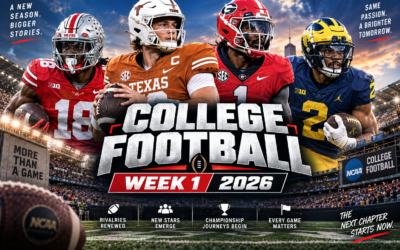
Ninety-one games are on the Week 1 schedule, running from Thursday through Monday. Twenty of the 24 games involving ranked teams carry spreads of 20 points or more. Eleven of them are 30-point spreads. So most of this weekend is a formality. But the parts that aren’t are excellent. LSU vs. Clemson is the game Saturday night, 7:30 p.m. Eastern on ABC, Tiger Stadium in Baton Rouge. Two programs that both call their home field Death Valley, playing the back end of a home-and-home that Clemson lost in South Carolina last year. The reason this is the most anticipated season opener in recent LSU history has a name. Lane Kiffin makes his debut as head coach of the No. 11 Tigers, and he does it in prime time in one of the loudest buildings in the sport. Kiffin has spent his career being interesting rather than complete. He has never had a job like this one, with this level of talent and this level of impatience. The first 60 minutes are going to tell us something about whether the pairing works. LSU brings quarterback Sam Leavitt, linebacker Whit Weeks and running back Caden Durham. Clemson counters with Christopher Vizzina stepping into the starting job under enormous pressure for a team that arrives unranked and looking to make a statement. Notre Dame is playing at Lambeau Field Sunday night, 7:30 p.m. Eastern on NBC and Peacock. No. 4 Notre Dame against Wisconsin at Lambeau Field in Green Bay. Neutral-site openers have become routine. This one is not. Playing a college game in that stadium, in September, with Wisconsin functionally at home, is the sort of scheduling that justifies itself. Quarterback CJ Carr and cornerback Leonard Moore lead the Irish. Wisconsin has linebacker Mason Posa and running back Abu Sama III, and head coach Luke Fickell badly needs a signature win to quiet a conversation that has been building around his job. The rest of the weekend worth your time Boise State at No. 2 Oregon, Saturday at Autzen. Dante Moore runs an Oregon offense that should be among the country’s best. Boise State brings fifth-year quarterback Maddux Madsen. This is an early measuring stick for whether the Broncos are a serious Playoff proposition again. No. 9 Ole Miss vs. No. 24 Louisville, Sunday night in Nashville. Trinidad Chambliss appears to have won his eligibility case against the NCAA and gets an immediate national showcase to open a Heisman campaign. Kewan Lacy runs behind him. Louisville answers with running back Isaac Brown and a pass-rush duo in Clev Lubin and AJ Green that can attack two new Ole Miss starting tackles. Baylor vs. Auburn at Mercedes-Benz Stadium in Atlanta. A referendum on two coaches. Alex Golesh gets an early crack at a marquee win in his Auburn debut. Dave Aranda can justify Baylor’s continued faith in him. Both quarterbacks, DJ Lagway for Baylor and Byrum Brown for Auburn, are high-profile transfers making debuts. No. 19 SMU at Florida State, Monday night in Tallahassee. The last game of a long weekend, and an ACC conference matchup rather than a warm-up. The Apple Cup in Week 1. Washington and Washington State this early is a scheduling gift. What already happened Week 0 delivered the first upset of the year when North Carolina beat TCU in Dublin. Memphis handled UNLV, Virginia beat NC State decisively, North Dakota State passed its FBS test with a blowout of Jacksonville State, and Stanford opened the Tavita Pritchard era with a win over Hawaii. Thursday brought the first genuine surprise of Week 1. Colorado went to Atlanta and beat Georgia Tech 14-13 as a 6.5-point underdog, a defensive slog that nobody projected. UMass beat Rutgers 37-21, which is the kind of result that gets a coach fired in November. Elsewhere Thursday: No. 21 Utah rolled Idaho 66-14, No. 25 Missouri beat Arkansas-Pine Bluff 54-14, Minnesota handled Eastern Illinois 59-7, Wake Forest beat Akron 38-16 and Illinois beat UAB 42-23. How to read Week 1 results Every year, people overreact to openers. Here is a filter that holds up. A blowout over an FCS or low-tier FBS opponent tells you nothing. Ohio State is the preseason No. 1 and defending national champion Indiana opens as a massive favorite. Neither game will produce usable information. Close games against bad teams are the real signal. Georgia Tech losing at home to Colorado by one point matters far more than any 50-point win this weekend. Teams that struggle against overmatched opponents in September usually keep struggling. Watch offensive line play, not skill positions. New quarterbacks look bad behind bad lines and good behind good ones. In Week 1 especially, the line is doing more to determine what you see than the guy taking the snap. Coaching debuts get one game of patience, not more. Kiffin at LSU, Golesh at Auburn, Eric Morris at Oklahoma State replacing Mike Gundy, Tavita Pritchard at Stanford. First games are noisy. The second and third tell you the direction. What Week 1 means for the Playoff picture Almost nothing, and that is by design. The expanded College Football Playoff has changed how September functions. A single September loss used to be close to disqualifying for a team outside the traditional powers. It is now survivable, which is why so many programs are comfortable opening against overmatched opponents and saving the risk for conference play. The teams that should worry are the ones without a signature win to point to in December. Indiana opens its title defense as a heavy favorite. Ohio State is the preseason No. 1. Both will spend the fall building résumés rather than surviving eliminations. For everyone in the second tier, games like Boise State at Oregon and Clemson at LSU are worth more than the win column suggests. A road result against a ranked team in September is the kind of thing a selection committee remembers in November when it is separating three teams with identical records. The one to circle If you…

Read More
Yordan Alvarez

Yordan Alvarez Is Chasing the First Triple Crown in 14 Years

Only one player has won a Triple Crown in the past 59 years. Miguel Cabrera did it in 2012, and before him you have to go back to Carl Yastrzemski in 1967. Yordan Alvarez currently leads the American League in batting average, home runs and RBIs. He also has a chance at the outright major league Triple Crown, not just the AL version. Ballots are due September 28. There are about three weeks left to sort all of this out. American League MVP: effectively decided Alvarez has held the top spot on most MVP boards since Aaron Judge went down with an injury in late May. He sits around -2500 in the betting market, which is as close to settled as these things get in early September. The numbers behind it: a .320-plus average, 36 home runs and 90-plus RBIs entering the final stretch. What makes the case airtight is that he does not just lead the old back-of-the-card categories. He leads the American League in nearly every non-speed offensive metric, and he holds a large edge in win probability added, which matters because Houston has been in a tight playoff push all season. His August was his worst month by wRC+ and it was still 138, meaning 38% better than league average. That is what a floor looks like for a genuine MVP. Junior Caminero is the closest challenger at around 13-1. The Tampa Bay third baseman has 35 homers and 84 RBIs while carrying a career-best .895 OPS and a much-improved 11.8% walk rate, and he has done it while the Rays sit atop the AL East. In most years that is an MVP season. Bobby Witt Jr. leads the American League in both bWAR (6.2) and fWAR (6.3). He plays for a Royals team in last place in the AL Central, and that has been enough to keep him out of the conversation. Whether that is fair is a debate worth having. Pete Alonso deserves a mention too. In his first season in Baltimore he is tied with Alvarez atop the RBI leaderboard, and the two of them are the only players in baseball this year with 90-plus RBIs and 4-plus fWAR. The Triple Crown math Alvarez’s average and RBI leads are comfortable. The home run race is the risk. His lead over Caminero in homers has almost disappeared after a slow August in which he went deep once. Here is the part that gets lost: Alvarez wins the MVP with or without the Triple Crown. The Triple Crown matters because it neutralizes the voter bias against designated hitters that would otherwise cost him first-place votes. It is insurance, not the case itself. National League MVP: Crow-Armstrong pulled away Pete Crow-Armstrong is around -1600 after a resurgent August. Shohei Ohtani sits at +900. The gap comes down to Ohtani’s arm. He has faced hitters in live batting practice but is not ready for major league games, and every week he stays off the mound removes a piece of the two-way argument that has decided his previous MVP cases. Both players deserve it. Only one can have it. National League Cy Young: the runaway nobody saw coming Jacob Misiorowski is at roughly -1400 to Chris Sale’s +750, and the underlying numbers explain why. A 1.68 ERA. A 39% strikeout rate, which for a starting pitcher is close to absurd. A 248 ERA+ that is more than 50 points clear of the next-closest pitcher in baseball. He became the second-fastest pitcher in major league history to reach 200 strikeouts in a season. The counterintuitive part is that if he wins this going away, it will be because of consistency rather than dominance. A 67% quality start rate and an average game score of 68.2, five points better than the next pitcher, is the profile of someone who simply never gives a bad start. That is harder to do than posting a few 15-strikeout outings. Cristopher Sánchez is the outsider case. He does not miss bats at Misiorowski’s rate, but he goes deeper into games and he wins, and he is the only NL pitcher with a realistic shot at 20 victories. In a different year that carries an award. This year he needs Misiorowski to slip. A pitcher has not won an MVP since Clayton Kershaw in 2014, excluding Ohtani’s two-way seasons. Misiorowski’s ERA+ is good enough that the argument is being made seriously. American League Cy Young: the only real race left Cam Schlittler holds a -170 edge over Dylan Cease at +145. Schlittler’s 194 ERA+ is second in baseball behind Misiorowski. That margin is solid but not safe. Four or five starts remain for each pitcher, and a single disaster outing in the middle of September could flip it. This is the award to watch if you want something genuinely undecided. Rookie of the Year Kevin McGonigle is the American League lock, described by more than one voter-watcher as the only take-it-to-the-bank award on the board. The National League race got scrambled when JJ Wetherholt, the previous leader, was overtaken. That one is genuinely open with several players in the mix. Manager of the Year is the one people forget It is the least discussed award and the one most likely to produce a genuinely interesting winner this season. The American League case is sitting in plain sight. A club that lost 121 games in 2024 entered September leading the AL Central, a run we unpack in the White Sox chase in the AL Central. Whatever combination of development, roster management and clubhouse work produced that, it is the sort of turnaround the award exists to recognise. The National League version is harder. Milwaukee has the best record in baseball and Atlanta engineered a resurgence after a slow start, but both were expected to be good. Voters historically reward the team that outperformed its projection rather than the one that met a high one, which usually hurts the clubs at the very top. Keep an eye…

Read More
White Sox

The White Sox Are Three Weeks From the Least Likely Division Title in Modern Baseball

Chicago entered September with a three-game lead over Cleveland in the American League Central. Read that again in the context of where this franchise was. The White Sox lost 121 games in 2024, the most in modern major league history. They were not supposed to be relevant in 2026. They were supposed to be somewhere in year three of a rebuild that most people assumed would take five. Instead they are twenty-something games from a division title, and if they finish it, it will be the most improbable division win the sport has produced. Why “improbable” is the right word Baseball has produced surprise division winners before. The 2005 Padres won the NL West at 82-80. The 1973 Mets took the NL East at 82-79. Those teams were mediocre in strong-ish divisions. This is different in kind. A team does not go from 121 losses to a division title in two years. The 1969 Mets went from 73 wins to a World Series in one, which is the comparison everyone reaches for, but that team had Tom Seaver and Jerry Koosman and a farm system that had been stocking up for years. The 2026 White Sox got here through a combination of internal development arriving faster than projected and an AL Central that never produced a dominant team. Cleveland has been the persistent threat rather than the runaway favorite. Kansas City has Bobby Witt Jr. leading the American League in both bWAR and fWAR and still sits in the division basement, which tells you how little else the Royals have. His absence from the MVP conversation is one of several oddities in the 2026 MLB awards race. The bigger structural story The White Sox situation sits inside a stranger league-wide picture. Entering the final weeks, 22 of the league’s 30 teams were either in playoff position or within five and a half games of a spot. That is an extraordinary amount of teams still alive with under 25 games left. The third American League wild card is the epicenter of it. Seven teams entered the Labor Day weekend within five and a half games of each other, and not one of them had a record above .500. No team has ever reached the postseason with a losing record in a full season. The 2020 Astros made a 16-team pandemic field at 29-31, which does not count. There is a real chance that changes this year. The AL Central had a vacancy and Chicago walked into it Any honest version of this story has to account for the division. Cleveland has been steady rather than dominant. Kansas City has the most valuable position player in the American League by WAR and is in last place, which is close to a statistical curiosity. Detroit traded Tarik Skubal, its ace and Opening Day starter, to the Dodgers at the deadline, which is not the move of a team that believed it was winning this thing. Minnesota has drifted. That is a division with no team willing to seize it. In the AL East, where Tampa Bay held a 4.5-game lead over the Yankees entering September, or the NL Central behind Milwaukee’s league-best record, a 121-loss team from two years ago does not get within twenty games of first place. None of that diminishes what Chicago has done. Somebody had to take the opening, and four other organizations with more resources and more experience did not. But it does explain the mechanism. Improbable outcomes usually require both an unlikely riser and a vacuum for them to rise into. Is that a problem or a feature? Depends who you ask, and the answer says a lot about what you want the regular season to be. The case against: 162 games exist to separate good teams from bad ones. A format that lets a 79-83 team into October undermines the entire premise. The wild-card series is only three games, which means the sorting mechanism at the end is close to a coin flip. The evidence backs that up. Since the best-of-three wild-card round started in 2022, there have been 16 such series. The higher seed, playing every game at home, has gone 7-9. The 89-win Padres eliminated the 101-win Mets in 2022. The 90-win Rangers took out the 99-win Rays in 2023. The case for: this is exactly why 22 teams are still selling tickets in September instead of eight. The alternative is two-thirds of the league playing out the string from mid-August, which is what baseball looked like for most of its history and which nobody remembers fondly. What the White Sox have to do Hold off Cleveland for three weeks. That is genuinely the whole assignment. The schedule matters more than the roster at this stage. Head-to-head games with the Guardians will decide it, and any series against a team fighting for the third wild card is effectively a playoff game for both sides. The thing working in Chicago’s favor is that nobody has treated them as a contender all year, which means the pressure has been asymmetric. Cleveland has spent the season expected to win this division. The White Sox have spent it as a curiosity. That dynamic tends to hold up better in September than talent gaps do. The thing working against them is that young teams in first place in September are historically bad at staying there. Experience is a soft factor that gets overused as an explanation, but it is real in exactly this situation: closing out a division race is a specific skill that almost nobody on this roster has practiced. The part that will get lost If Chicago holds on, the story will be told as a feel-good arc about a rebuild paying off early. That framing is fine but it undersells what happened. A 121-loss season is an organizational failure at every level. Coming back from it in two years means the people who caused it were replaced, the process changed, and a lot of unglamorous…

Read More
Serena Williams

Serena Williams at 44: The Comeback That Was Never About Winning

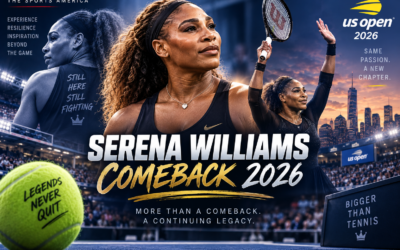
In September 2022, Serena Williams lost to Ajla Tomljanovic in the third round of the US Open. She had written in Vogue that she was evolving away from tennis. Everyone treated it as the end, including her, more or less. Four years later she is 44 years old and she has played four events this season. How it actually happened The comeback did not arrive as a grand announcement. It arrived in pieces. In early June, Williams accepted a wild card into the Queen’s Club Championships in London and played doubles with young Canadian Victoria Mboko. They won their opening match. Mboko then picked up a knee injury and the pair withdrew. That was it. One match, four years after her last. It was enough to restart the conversation. Two weeks later she was in Berlin playing doubles with Karolina Muchova. Asked by a reporter about Wimbledon wild cards, she seemed genuinely surprised any were left. Then she turned to Muchova and asked whether she thought she was ready for singles. The All England Club had been holding the eighth and final women’s singles wild card open, waiting on her. On June 21, they announced she had taken it. Wimbledon posted “This is not a drill” on social media. The WTA replied asking anyone to name a more iconic return. She was entered in doubles at Wimbledon too, with Venus. A knee problem ended that plan before it started. The Cincinnati match that changed the calculation In mid-August, the sisters finally got on court together at the Cincinnati Open. They lost in the first round to Marta Kostyuk and Peyton Stearns, but the scoreline told the real story: 10-8 in a third-set super tiebreak. That is not a legacy appearance. That is two players who are still competitive against a current tour pairing, one of them 44 and the other 46. The US Open responded with two wild cards. Serena entered the mixed doubles championship alongside Carlos Alcaraz, the world No. 2, in the tournament’s restructured event. Then the women’s doubles draw arrived with Williams and Williams in it, their first Grand Slam appearance together since Serena’s 2022 farewell. Their run in New York ended this week, in a draw we break down in full in our US Open 2026 second week preview. What Venus was carrying into this Serena’s story has dominated the coverage, which slightly obscures the harder version of the same story. Venus Williams is 46. She returned to competitive tennis last year on a wild card at the Washington Open after a 16-month absence. She arrived at the US Open on a long losing streak in singles, and the New York crowd was, as it has always been, entirely on her side regardless. Playing doubles with your sister at 46 is not a nostalgia exercise when you are also grinding through singles draws where the results are not going your way. It is a choice to keep showing up in front of people who remember you differently. That takes something the highlight packages do not capture. The Alcaraz pairing was smarter than it looked Putting a 44-year-old former world No. 1 alongside the current world No. 2 in a revamped mixed doubles event reads, at first glance, like a promotional stunt. It was not, or at least not only that. Mixed doubles rewards exactly the skills that decay last: serve placement, return of serve, reflexes at the net, court sense. It does not require covering a full singles court for three hours. Williams reportedly looked genuinely sharp in stretches of it, which is what convinced people the Venus partnership was worth a wild card too. There is a broader point here about how tournaments handle returning legends. The lazy version is a ceremonial singles wild card that produces a first-round loss and an emotional video package. The USTA instead put her in a format where she could actually compete, in an event they were trying to rebuild anyway. Both sides got something real out of it. More tournaments should think that way. A 44-year-old is not a museum exhibit. She is a specific player with a specific remaining skill set, and the job is to find the format that fits it. Why this comeback matters beyond tennis The obvious frame is longevity, and there is something to it. Athletes returning in their forties is no longer unusual across sport, and the sports science has genuinely changed what a 44-year-old body can do. But that framing misses what is actually interesting here. Serena Williams did not need this. She has 23 Grand Slam singles titles. She has businesses, a venture fund, a family. There is no career-defining gap on her record and no financial reason to spend a summer losing first-round doubles matches in Ohio. She came back because she wanted to play. That is a very different motivation from the one that drove her for two decades, and it is a much rarer one at this level. Most athletes return to prove something. She returned because she missed it. The pair had not won a title together since Wimbledon in 2016. The last time they played a Slam together before this stretch was the 2018 French Open. Those gaps are why the Cincinnati super tiebreak mattered more than the result. What happens next Nobody knows, including her, and she has been fairly open about that. She said her mindset shifted toward having fun before the Wimbledon singles return. Every decision this season has been made close to the deadline, sometimes at the deadline. There is no announced schedule and no stated goal beyond the next event. That ambiguity is the most honest part of the whole thing. Retirement announcements are a genre with rules: a farewell tour, a final match, a speech. Williams did that in 2022 and then found the ending unsatisfying enough to undo it. The version we got instead is messier and more human. A 44-year-old and a 46-year-old accepting wild cards,…

Read More