









In 2015, a beer at MetLife Stadium cost about $5. Today it costs around $12, an increase of 140% in a decade, and it is only one line in the rising cost of attending an NFL game.
That single number captures a trend that fans across the country have felt in their wallets. Game-day costs have risen far faster than general inflation, and the 2026 season has pushed them higher still. Tickets, concessions and parking have all climbed, with some markets seeing increases that would be remarkable in any consumer category.
Here is what the data says about what fans actually pay, where it hurts most, where it is still relatively affordable, and how to enjoy a game without wrecking the monthly budget.
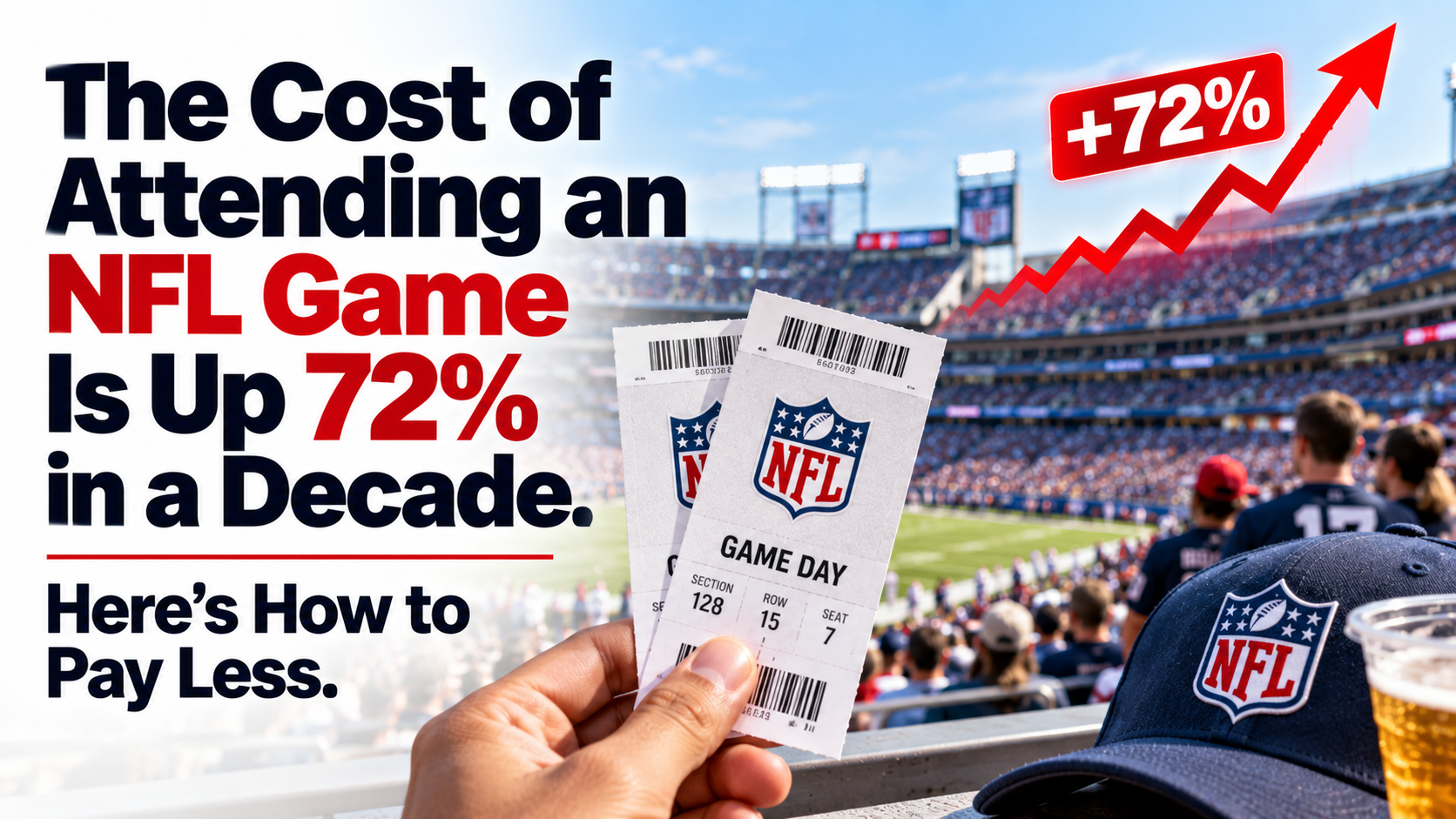
The cost of attending an NFL game has jumped 72% in a decade
The clearest long-term picture comes from FinanceBuzz, which tracked game-day costs over the past ten years. Its analysis found that the average cost of going to an NFL game rose by $82, or 72%, between 2015 and 2025. That is nearly double the national rate of inflation over the same period, which was 36.5%.
The measure is simple and realistic: one ticket, one beer, one hot dog and a share of parking. By that standard, the average per-person cost across the league last season was $196.
The acceleration is recent. In 2024, the league average stood at $158. One season later it had jumped by nearly $40 per fan. Rather than creeping up gradually, costs have surged over the past two years.
Most of that increase comes down to a single line item: the ticket itself. The league-average ticket rose from $86 in 2015 to $155 in 2025, an 81% jump. Beer and hot dogs have climbed as well, but a fan can skip the beer. Nobody gets in without a seat.
The most expensive fan bases
Some teams have seen increases that dwarf the league average.
Detroit Lions. The cost of attending a Lions game rose from $98 in 2015 to $429 last season, a staggering 336% increase and the largest in the league. A decade ago, Detroit was one of the cheapest tickets in football. Years of on-field success have transformed demand.
Las Vegas Raiders. Costs rose 238%, driven largely by the move to Allegiant Stadium and the premium pricing that came with it.
Buffalo Bills. Per-person costs climbed from $91 to $294, a 223% increase. The Bills have also just opened a new $2.2 billion stadium with 60,108 seats, which is already pushing prices even higher.
According to Bookies.com’s family cost rankings, the Bills now have the league’s highest average single ticket at $397.02, with a block of four seats averaging $1,588.08. Buffalo unseated the Chicago Bears, who had topped that list every year since 2023.
The most affordable teams
At the other end of the scale, a handful of fan bases have actually seen costs fall.
New Orleans Saints. The per-person cost of attending a Saints game dropped from $117 in 2015 to $110 in 2025, a 6% decrease.
Indianapolis Colts. Costs fell from $110 to $104, down 5%.
Measured against a decade of inflation, both of those represent a genuine discount.
Cleveland Browns. Browns fans enjoy the cheapest overall experience in 2026, with a family-of-four game-day cost of $251.09, according to Bookies.com.
Concessions: where the small costs add up
Ticket prices get the headlines, but concessions are where many families feel the sting on the day itself.
Action Network priced a simple order of two beers, two soft drinks and four hot dogs at every NFL stadium for 2026. The results reveal a wide spread:
- Allegiant Stadium (Las Vegas): about $86.63, the highest in the league
- Northwest Stadium (Washington): about $83.94, with two beers alone costing $34.10
- SoFi Stadium (Rams and Chargers): about $83.51
- Highmark Stadium (Buffalo): about $79.15, including the league’s most expensive hot dogs at $46.52 for four
- MetLife Stadium (Giants and Jets): about $74.13
Beer prices, in particular, have outpaced inflation dramatically. Research highlighted by The Food Institute found that beer costs at six NFL stadiums have doubled or more since 2015, rising at roughly four times the rate of inflation.
The true cost of a season of fandom
For die-hard supporters, a single game is only the start. RotoWire’s 2026 fan cost study calculated the full price of following a team properly: attending every home game, streaming every road game and making one away trip to the team’s farthest road fixture.
The spread between teams was enormous. The most expensive fan base in football belongs to the Buffalo Bills, where a committed season runs about $4,229. Cleveland Browns fans get the best deal in the league at roughly $1,131. That gap of $3,098 means a Bills supporter pays nearly four times what a Browns fan does for the same level of devotion.
Streaming is a growing part of that equation. With games spread across broadcast networks, cable and multiple streaming services, fans who want to watch every snap now need several subscriptions at once.
Why prices keep rising
Several forces are pushing costs upward at the same time.
Demand is at record levels. The NFL remains the most-watched sport in the United States, and winning teams in particular have seen ticket demand surge.
New stadiums bring premium pricing. Buffalo, Las Vegas and Los Angeles all illustrate how new venues reset the price floor, with seat licences, premium clubs and dynamic pricing.
Dynamic pricing is standard. Teams and resale platforms now adjust prices in real time based on opponent, weather, team form and day of the week.
Wider inflation. Food, labour and energy costs have risen across the economy. Diesel has hit record highs above $6.50 a gallon this month, which feeds into the cost of everything from food deliveries to stadium operations.
Seven ways to cut the cost of a game day
Rising prices do not have to mean staying home. A little planning goes a long way.
1. Pick the right opponent. Games against less glamorous opponents, or late-season games involving teams out of contention, typically sell for far less on the resale market.
2. Watch prices closer to kickoff. For low-demand games, resale prices often fall in the final days as sellers try to offload tickets. For marquee games, the opposite is true, so know which kind of game you are buying.
3. Compare all-in prices. Service fees and taxes can add significantly to the face value. Compare the final checkout price across platforms rather than the headline number.
4. Eat before you arrive. Outside food is generally prohibited inside stadiums, but nothing stops you from having a proper meal beforehand. For a family of four, that alone can save more than $50.
5. Rethink parking. Official stadium lots are often the most expensive option. Public transport, park-and-ride services or lots a short walk away can cut costs substantially.
6. Set a spending limit for the day. Decide in advance what you will spend on food, drinks and merchandise. It is easy to overspend when the atmosphere is electric.
7. Consider the alternatives. A local watch party, a sports bar or a gathering at home can deliver much of the atmosphere at a fraction of the price. Save the stadium visit for one special game a season.
A sample game-day budget
Averages are useful, but it helps to see how they add up for a real outing.
At the FinanceBuzz league average of $196 per person, which covers a ticket, one beer, one hot dog and parking, a group of four would spend roughly $784 before a single scarf or jersey is bought. Add merchandise and fuel for the drive, and a family day out can comfortably pass $900 in many markets.
Team choice changes the maths dramatically. Bookies.com puts the full family-of-four cost at a Browns game at about $251. In Buffalo, four tickets alone average nearly $1,590 before anyone buys food or parks the car. That is a difference of more than $1,300 for broadly the same afternoon of football.
The bottom line
The cost of attending an NFL game has become a genuine household budgeting decision rather than a casual weekend outing. The league average of nearly $200 per person, before merchandise and travel, puts a family day out well beyond what many fans can afford regularly.
However, the variation between teams is huge, and smart choices can bring the cost down considerably. Choose the matchup carefully, compare full prices, plan food and parking in advance and treat stadium visits as occasions rather than habits. That way, the experience stays special without becoming a financial burden.
Prices quoted in this article are averages and estimates from third-party studies and will vary by opponent, date, seat location and market demand.