









Nvidia became the most valuable company on earth by selling the picks and shovels of the artificial intelligence boom. Its revenue grew 65% last fiscal year to $215.94 billion. Most recent quarter showed year-on-year growth above 100%. Its chief executive said last week that the company will sell twice as many chips next year as it does this year.That gap between operating performance and share price is the most interesting thing in technology investing right now. Nvidia AI chip demand is not the question anymore. The question is how much of the money flowing into AI infrastructure Nvidia gets to keep.
What the numbers actually say about Nvidia AI chip demand
Start with the company’s own guidance, because it was unusual.
Nvidia typically issues quarterly projections. Last month it broke that habit and forecast a 70% jump in next fiscal year’s revenue, alongside a second quarter that beat on both revenue and profit. Issuing an annual guide is a deliberate signal: management is telling the market that visibility extends well beyond the next three months.
The reaction was immediate. At least sixteen brokerages raised their price targets, with LSEG data pointing to strong demand for the next-generation Rubin processors. Chip-linked names rallied in a move worth nearly $150 billion across the sector, with Intel, Micron, Broadcom and US-listed SK Hynix shares all rising. AI cloud companies backed by Nvidia, including CoreWeave and Nebius, gained between 2% and 4.5%.
Then Jensen Huang went further. Speaking last Thursday, he said he expects Nvidia to sell twice as many chips next year as this year. That is not a demand-constrained company talking.
The underlying driver is hyperscaler capital expenditure, which keeps climbing. Microsoft, Meta, Alphabet and Amazon have all raised capex guidance repeatedly, and much of that spending lands in Nvidia’s revenue line. Memory supply is tight. Custom silicon backlogs stretch visibility into 2028.
So why is the stock lagging?
Four pressures explain the disconnect.
Competition is finally real
Huawei is accelerating the launch of its own AI chip, and Nvidia shares slipped on that news last week. That matters less for the American market than for the Chinese one, but China has been a meaningful share of demand and is increasingly closed by export controls.
More significantly, Nvidia’s own customers are building alternatives. OpenAI and others have been developing in-house chips specifically to reduce dependence on processors that are both expensive and supply-constrained. Every hyperscaler that successfully deploys custom silicon is a customer buying fewer GPUs than it otherwise would.
The circularity problem
Nvidia has taken equity stakes in companies that are also its customers. CoreWeave and Nebius are the clearest examples. Critics argue this inflates the apparent strength of AI demand: money goes out as investment and comes back as revenue.
The counterargument is that these are genuine businesses buying genuine hardware, and that strategic investment in an emerging customer base is ordinary corporate behaviour. Both readings have merit, and the market has been unable to settle between them, which is precisely why the multiple has compressed.
Valuation scepticism across the AI complex
Not every AI stock riding this year’s rally has growth that lasts, and portfolio managers have started saying so publicly. Chip stocks wobbled earlier this month on commentary about potential AI development pauses from major labs. California’s governor signed an executive order aimed at reining in AI companies, including provisions described as an “AI kill switch.” Regulatory risk has moved from theoretical to scheduled.
Rates
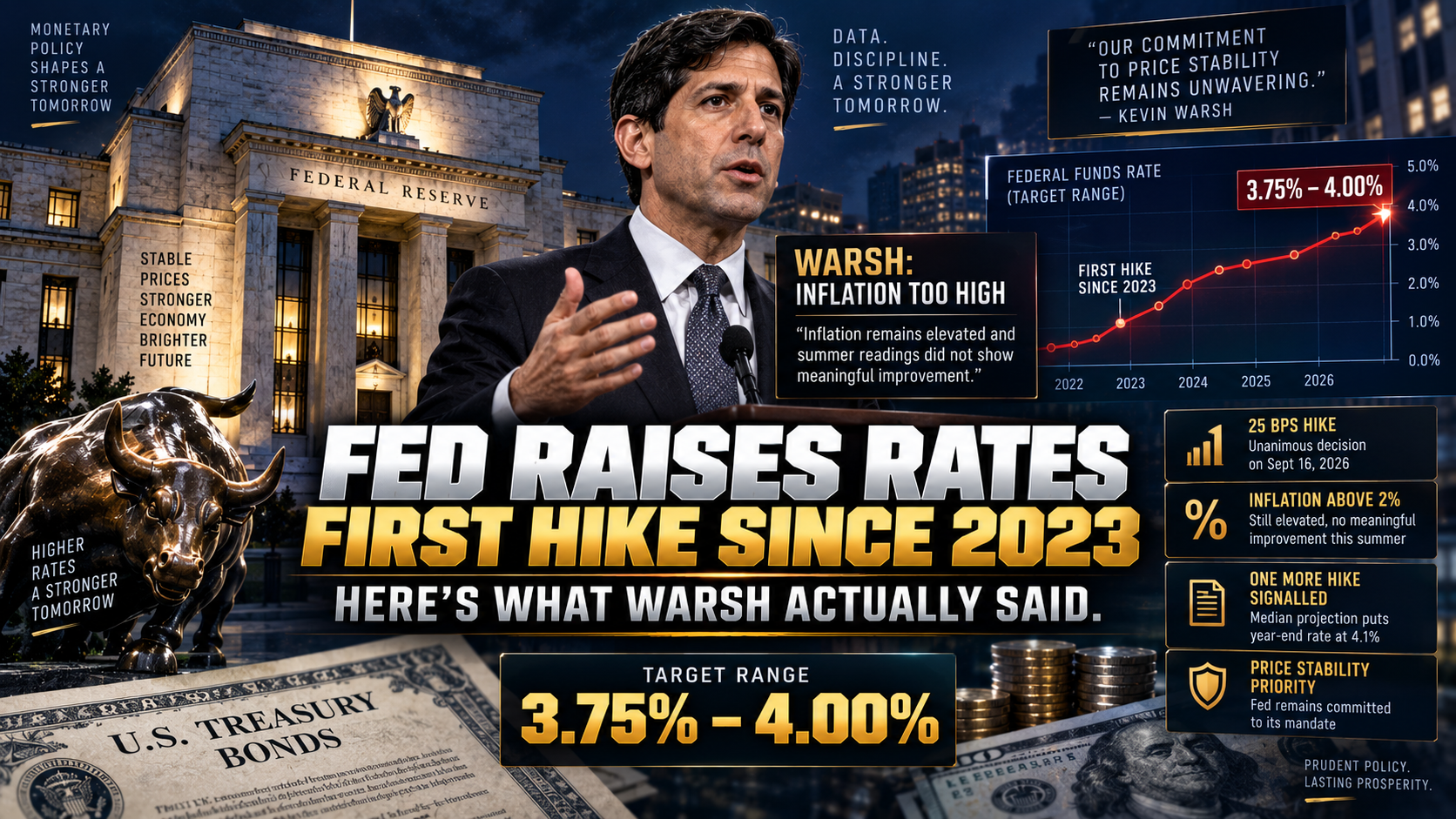
The mechanical one. The Federal Reserve raised interest rates last Wednesday for the first time since July 2023, taking the target range to 3.75%-4%, with sixteen of eighteen officials expecting another increase before year-end. The ten-year Treasury yield has pushed toward 5%. Higher discount rates compress the present value of future earnings, and no sector is more exposed to that maths than long-duration growth technology.
The valuation argument is genuinely interesting
Here is the detail that gets overlooked. Nvidia trades at a forward price-to-earnings ratio of about 17.9. Advanced Micro Devices trades at roughly 37.2. Intel is near 46.2.
The most dominant company in the sector is also the cheapest on forward earnings, because analyst estimates have risen faster than the share price. That is not a bubble signature. That is a stock where expectations have lagged results.
Consensus sits at a Buy rating with an average twelve-month target in the $324 to $329 range against a share price that closed near $228 in late August, implying meaningful upside. One analyst has put a $350 target on the stock, which would imply a market capitalisation around $8.5 trillion.
None of that is a recommendation. It is context for why the “Nvidia is overvalued” conversation and the “Nvidia is undervalued” conversation are both happening loudly at the same time.
The signals worth tracking
Insider activity. Nvidia’s chief financial officer, Colette Kress, sold 34,900 shares on 17 September in a transaction worth $7.65 million. Routine planned sales are normal at any company with equity compensation, but the market notices them in a stock this debated.
Acquisition strategy. Reports have placed Nvidia in advanced talks to acquire the AI platform Hugging Face for somewhere between $12.9 billion and $14 billion. If completed, that would extend Huang’s push beyond chips into the software layer, which is where margins ultimately consolidate in any hardware cycle.
Geopolitics. Nvidia and OpenAI executives are expected at the state dinner for Xi Jinping in Washington on 24 September. Export controls, AI cooperation and critical minerals are all on the summit agenda. Few companies have more direct exposure to the outcome.
Talent. One underappreciated constraint: analysis this month suggested the US needs roughly 157,000 more workers to staff its AI chip ambitions. Fabs and data centres require people, and that is not a bottleneck money solves quickly.
The Rubin cycle and what has to go right
Every hardware cycle eventually runs into the same three constraints, and Nvidia is approaching all of them simultaneously.
Supply. Analyst notes following the most recent results pointed to strong demand for the next-generation Rubin processors, but Huang’s own framing has repeatedly described the company as supply-constrained rather than demand-constrained. Doubling unit volume next year requires foundry capacity, advanced packaging and high-bandwidth memory, and memory pricing has been rising. A company that cannot build what it has already sold does not capture the upside its order book implies.
Power and physical infrastructure. Data centres require electricity, cooling and land, and all three have become bottlenecks in the largest markets. Anthropic and OpenAI have reportedly begun hunting for smaller data centre deals, which is what happens when the biggest sites are spoken for. That has knock-on effects for deployment schedules and therefore for revenue recognition.
People. One analysis this month put the shortfall at roughly 157,000 workers needed to staff American AI chip ambitions. Fabs and data centres are labour-intensive to build and to run, and that is not a constraint capital resolves quickly.
Against all of that, the demand signal remains extraordinary. Nvidia’s most recent quarter showed revenue growth above 100% year on year. Its forward guidance extends a full fiscal year rather than a quarter. Sixteen brokerages raised price targets on the back of it.
The bull case is that these constraints are execution problems at a company that has executed relentlessly for a decade. The bear case is that constraints of this kind are how every hardware supercycle in history has ended: not with demand collapsing, but with the supplier failing to convert it.
What this means for the wider market
Nvidia is no longer just a stock. It is a macro instrument.
When Nvidia rallies, the Nasdaq rallies, and the S&P 500 follows because index weighting makes it unavoidable. That is why the Dow can post three consecutive losing weeks while the Nasdaq gains — the AI complex is carrying the broad index while rate-sensitive sectors sag underneath it.
That concentration is the genuine risk, and it has nothing to do with whether Nvidia’s business is sound. A market where a handful of names determine the direction of the whole is fragile regardless of how good those businesses are. The AI buildout could proceed exactly as Huang describes and the index could still be vulnerable to a sentiment shift in five stocks.
For anyone tracking Nvidia AI chip demand as a proxy for the AI cycle, the honest summary is this: demand is not the variable. Competition, regulation, interest rates and margin capture are. The company has told the market it expects to double unit volume next year. The market has responded by paying less for each dollar of those earnings than it pays for Intel’s.
One of those two positions is going to look obvious in hindsight.
