




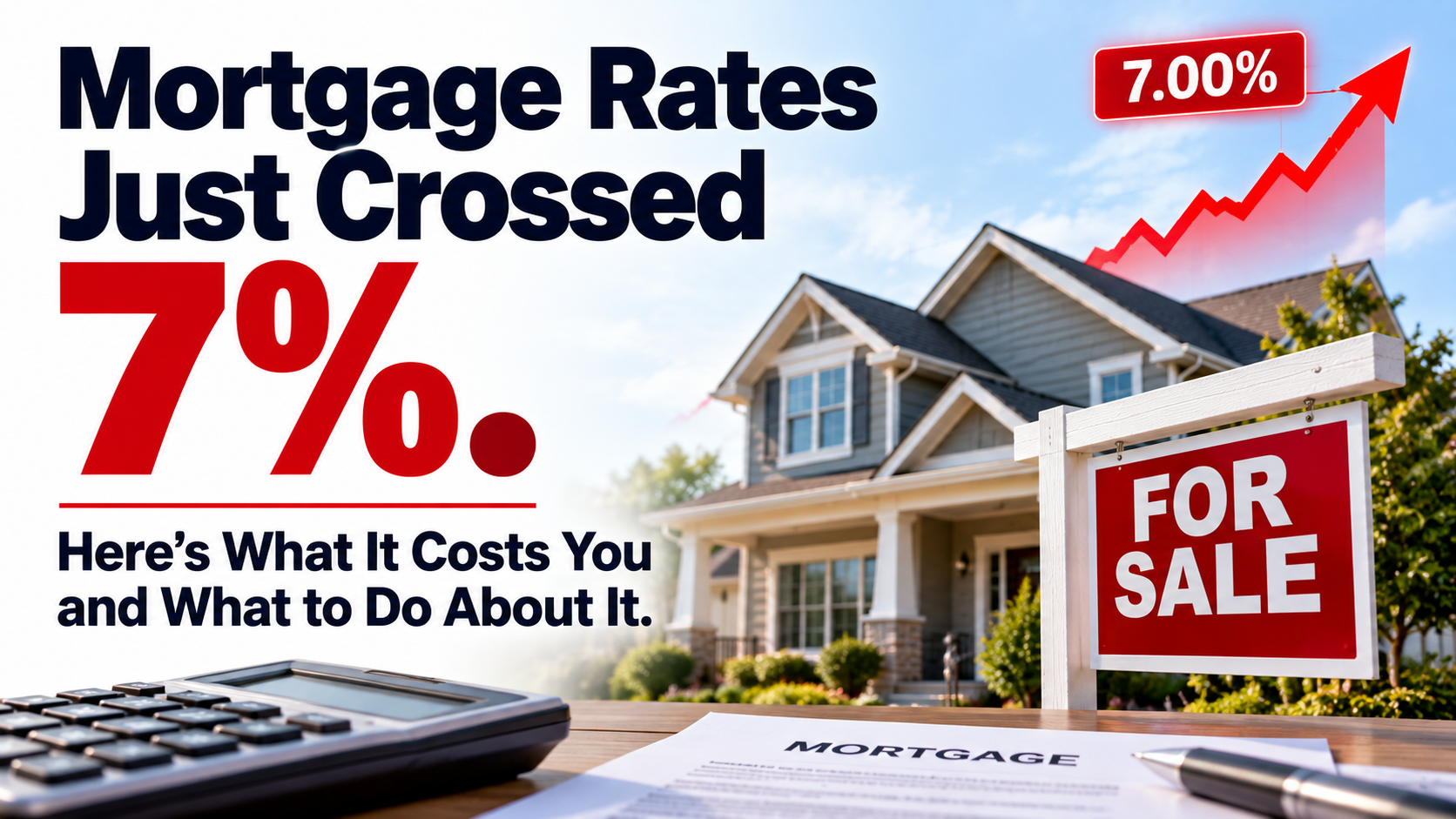
For the first time since January 2025, mortgage rates today have pushed the average 30-year fixed loan in the United States above 7%.
Freddie Mac’s weekly survey put the 30-year fixed-rate mortgage at 7.03% as of 24 September, up from 6.95% the week before and 6.30% a year ago. The 15-year fixed rate climbed to 6.42%, from 6.26% last week and 5.49% twelve months earlier.
Mortgage rates today are being driven less by the Federal Reserve than by a bond market that has pushed long-term borrowing costs to levels not seen since before the 2008 financial crisis. For anyone buying a home, refinancing or simply trying to understand where housing affordability is heading, that distinction matters enormously.
Why mortgage rates today crossed 7%
A common assumption is that mortgage rates follow the Federal Reserve. In practice, they track the 10-year Treasury yield far more closely.
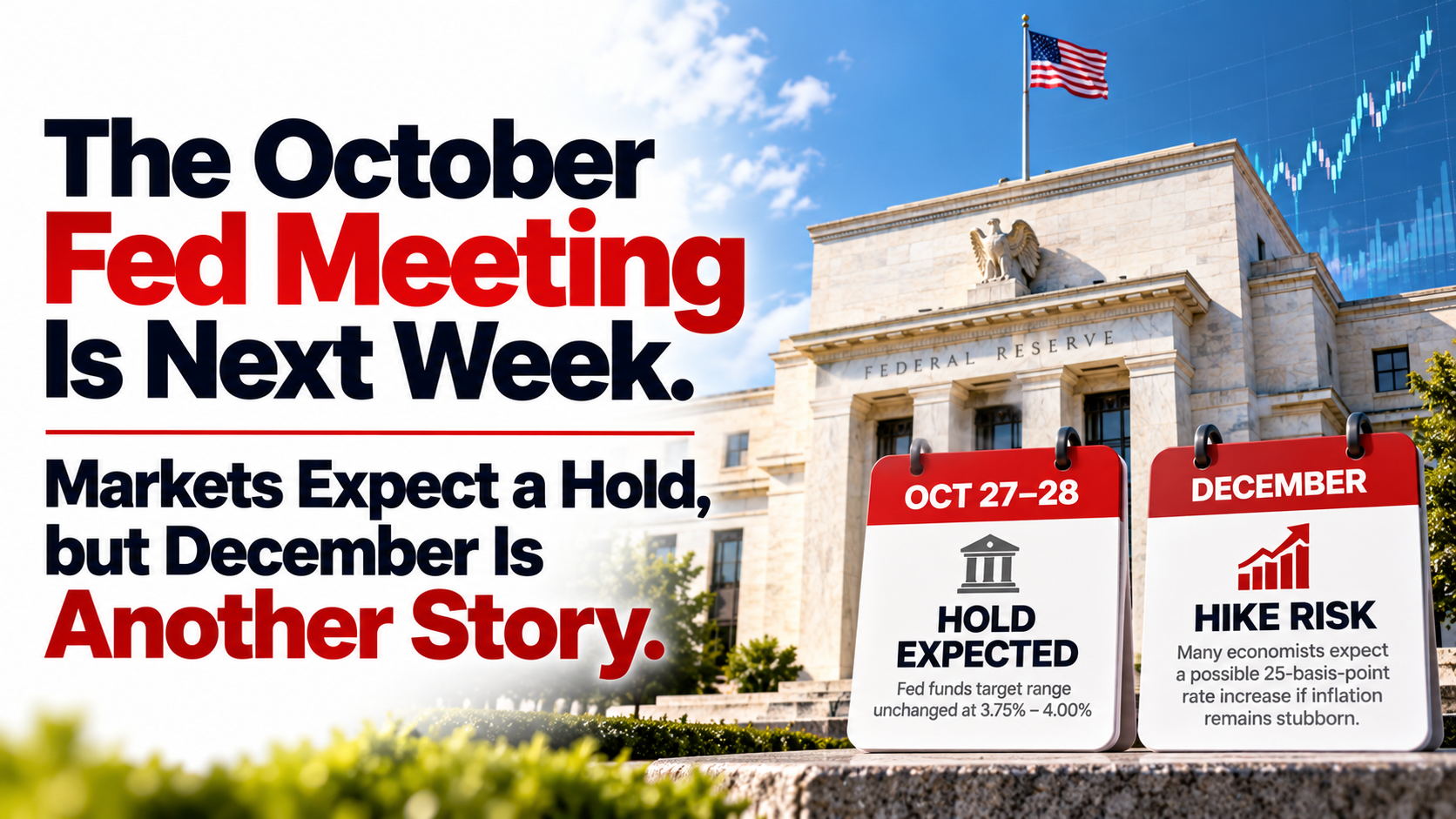
The Fed did raise its benchmark rate on 16 September, its first hike since 2023, lifting the federal funds range to 3.75%-4%. However, that policy rate governs overnight borrowing between banks. A 30-year mortgage is priced against long-term market rates, and those have moved dramatically.
The 10-year Treasury yield closed at 5.11% on 23 September, with the two-year at 4.85%, both up 14 to 15 basis points in a single session. By Thursday, the 10-year had reached 5.21%, the highest since 2007. Mortgage pricing sits at a spread above that benchmark, and the size of the spread depends on demand for mortgage bonds, market volatility and lender margins.
Consequently, until the 10-year stops making new highs, mortgage rates have little reason to fall.
What’s pushing the bond market higher
Four pressures have converged this month. Energy prices have surged because of the conflict involving Iran, feeding inflation. The Fed has turned hawkish and signalled more hikes. Corporate borrowing for AI infrastructure has flooded the market with new bonds. And persistent government deficits have raised the premium investors demand to hold long-dated debt.
Each of those factors lifts the 10-year yield, and the 10-year yield lifts mortgage rates.
What 7% means in real dollars
Headline percentages can obscure the actual cost. Here is what the move means for a typical borrower, based on a 30-year fixed loan with principal and interest only (excluding taxes, insurance and fees).
On a $300,000 loan: – At last year’s 6.30%: about $1,857 a month – At today’s 7.03%: about $2,002 a month – Difference: roughly $145 a month, or about $1,740 a year
On a $400,000 loan: – At 6.30%: about $2,476 a month – At 7.03%: about $2,669 a month – Difference: roughly $193 a month, about $2,320 a year and nearly $70,000 over the full 30-year term
Over the life of a $400,000 loan at 7.03%, total interest paid comes to roughly $561,000, which is considerably more than the original amount borrowed.
The 15-year option looks very different. At 6.42%, the monthly payment on a $400,000 loan rises to about $3,467, but total interest falls to roughly $224,000. For buyers who can absorb the higher payment, the savings are substantial.
How the housing market is holding up
Despite the jump, Freddie Mac’s chief economist struck a steady tone. “The housing market remains supported by a solid labor market and an economy that is growing at a healthy rate,” said Sam Khater.
That view is backed by recent data. August payrolls grew by 162,000, far above expectations, and unemployment has held around 4.1%. People with stable jobs continue to buy homes, even at higher rates.
Nonetheless, affordability is being squeezed from both sides. Rates are higher, and prices in many markets have not fallen to compensate. Earlier this year, in late March, the 30-year average stood at 6.38%. Buyers who hesitated then are now facing a noticeably higher monthly cost.
Seven practical steps if you’re buying now
Rising rates do not have to mean giving up. They do mean shopping more carefully.
1. Compare at least three lenders. Rates vary meaningfully between lenders for the same borrower. Even a quarter-point difference on a $400,000 loan at current rates is worth about $67 a month, or more than $24,000 over 30 years.
2. Work on your credit score first. Freddie Mac’s survey reflects borrowers with excellent credit and a 20% down payment. If your profile is weaker, your quoted rate will be higher. Paying down card balances before applying can help.
3. Understand rate locks. A lock guarantees your rate for a set period while the loan closes. In a volatile market, locking early protects you from further increases, although it also means missing any decline.
4. Ask about discount points. Paying points upfront reduces your rate. Whether it makes sense depends on how long you plan to stay in the home. The longer you stay, the more likely points pay off.
5. Consider the 15-year trade-off. The payment is higher, but the rate is lower and the total interest bill is dramatically smaller.
6. Look carefully at adjustable-rate options. An ARM offers a lower initial rate, which can make sense if you expect rates to fall or plan to move within a few years. The risk is that payments rise when the fixed period ends.
7. Budget for the full cost. Property taxes, homeowners insurance and, where applicable, mortgage insurance can add hundreds of dollars a month on top of principal and interest.
What about refinancing?
For most existing homeowners, refinancing no longer makes financial sense. Millions of Americans locked in rates below 4% during 2020 and 2021, and even buyers who purchased last year at around 6.3% are now below the current market.
That creates what economists call the “lock-in effect.” Homeowners with low rates are reluctant to sell, because moving would mean taking on a much more expensive mortgage. That keeps housing inventory tight, which in turn supports prices even as borrowing costs rise.
Some homeowners are turning to home equity lines of credit to access cash without giving up a low first mortgage, but those products are also priced off rising benchmarks.
Where mortgage rates could go next
The next few weeks carry several potential catalysts.
- Inflation data on Wednesday. The August PCE price index will shape expectations for another Fed hike in October. A hot reading would add pressure on yields.
- The September jobs report on Friday. Strong hiring would reinforce the case for higher rates; a slowdown could offer relief.
- Oil prices. Crude has been the single biggest driver of bond yields this month. Brent fell to around $97 on Friday on hopes that the Strait of Hormuz could reopen. Continued declines would likely ease mortgage rates over time.
The honest answer is that nobody knows whether 7% is a peak or a plateau. What is clear is that the sub-6% mortgages of a few years ago are not coming back soon.
A quick glossary for first-time buyers
Mortgage jargon can make an already stressful decision harder. These are the terms that matter most right now.
Fixed-rate mortgage. Your interest rate stays the same for the life of the loan, so your principal and interest payment never changes.
Adjustable-rate mortgage (ARM). The rate is fixed for an initial period, commonly five, seven or ten years, then resets periodically based on a market benchmark.
APR. The annual percentage rate includes the interest rate plus certain lender fees, giving a more complete picture of borrowing cost than the headline rate alone.
Discount points. Upfront fees paid at closing to lower your interest rate. One point typically equals 1% of the loan amount.
Rate lock. A lender’s guarantee to hold your quoted rate for a set period, often 30 to 60 days, while your loan is processed.
Loan-to-value (LTV). Your loan amount as a percentage of the home’s value. Freddie Mac’s headline survey assumes an 80% LTV, meaning a 20% down payment.
Private mortgage insurance (PMI). Usually required on conventional loans when you put down less than 20%. It protects the lender, not you, and adds to your monthly cost until you build enough equity.
Understanding these terms makes it much easier to compare offers side by side and spot the one that genuinely costs least over time. Freddie Mac’s official release also notes that its survey reflects borrowers with excellent credit, which is worth remembering when your own quote comes back higher.
The bottom line
Mortgage rates today have crossed a psychological threshold that many buyers had hoped not to see again. At 7.03%, the monthly cost of a typical home loan is roughly $145 to $195 higher than a year ago, and the lifetime cost is tens of thousands of dollars greater.
For buyers, the strategy is to shop aggressively, strengthen credit and weigh the 15-year option carefully. For existing homeowners with low rates, patience remains the default. And for everyone, the numbers to watch are the 10-year Treasury yield and the price of oil, because those, more than the Fed, will decide where mortgage rates go next.
This article is for general information only and does not constitute financial or mortgage advice. Speak to a licensed lender or adviser about your own circumstances.